2026年亚太经合组织林业部长级会议将于7月27日至28日在深圳举行1。作为会议举办地,深圳前海通过一系列生态建设项目,展现了经济发展与生态保护相融合的实践范例。
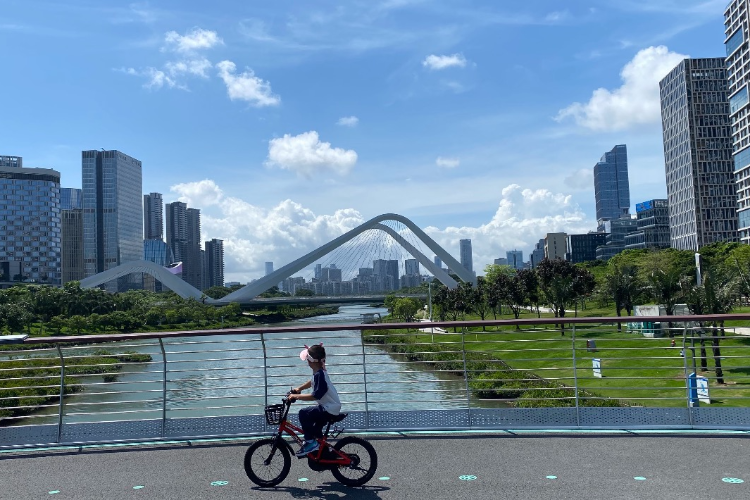
在前海的核心生态项目中,桂湾公园红树林湿地成为人与自然和谐共生的典范1。该公园全长1.9公里、总面积45公顷,绿地覆盖率达74%,拥有6种真红树和7种半红树,配备5万平方米海水湿地与2万平方米淡水湿地1。此外,嘉里中心通过垂直花园形成超1.2万平方米的立体绿化空间,在提升城市美观度的同时实现节能效率提升30%以上1。这些项目体现了前海对"三生融合"(生态、生产、生活)绿色发展模式的探索。
前海的经济发展呈现出强劲势头。上半年,前海地区生产总值达1677.4亿元,同比增长7.8%1,其中现代服务业增加值为1165.2亿元,增长11.0%1。固定资产投资完成702.9亿元,同比增长12.0%,占全市投资总额比重超五分之一1。实际使用外资达250.1亿元,占深圳全市总额的76.5%1。在产业集群方面,前海已培育出1个千亿级、7个五百亿级产业集群1。创新创业方面,深港青年梦工场在园团队达415家,其中香港团队376家,累计培育国家高新技术企业92家、专精特新企业25家1。
Shenzhen's Qianhai district is showcasing its integration of ecology, production, and livelihood through green development initiatives as the city prepares to host the 2026 Asia-Pacific Economic Cooperation Forestry Ministers' Meeting on July 27-28 1. The district has undertaken several flagship projects demonstrating this "three-in-one fusion" approach, including the Guiwan Park mangrove wetland, the Kerry Centre's vertical garden, and the Shenzhen-Hong Kong Youth Dream Factory 1.
Guiwan Park spans 1.9 kilometers with a total area of 45 hectares and maintains a 74 percent green coverage rate 1. The park features six true mangrove species and seven semi-mangrove species, alongside 50,000 square meters of saltwater wetland and 20,000 square meters of freshwater wetland 1. The Kerry Centre incorporates over 12,000 square meters of three-dimensional green space and has achieved energy efficiency improvements exceeding 30 percent 1.
Qianhai's economic performance reflects the success of this sustainable development model. In the first half of 2026, the district recorded a GDP of 167.74 billion yuan, representing a year-on-year growth rate of 7.8 percent 1. The modern service sector contributed 116.52 billion yuan in added value, growing at 11.0 percent, while fixed asset investment reached 70.29 billion yuan, a 12.0 percent increase that accounted for more than one-fifth of the city's total investment 1. Actual foreign investment utilized reached 25.01 billion yuan, representing 76.5 percent of Shenzhen's citywide total 1.
The district's innovation ecosystem has also expanded substantially. The Shenzhen-Hong Kong Youth Dream Factory currently hosts 415 teams, of which 376 are Hong Kong-based, and has cultivated 92 national high-tech enterprises and 25 specialized and sophisticated enterprises 1. These developments have contributed to the formation of one trillion-yuan-level and seven 500-billion-yuan-level industrial clusters in Qianhai 1.
评论
还没有评论,欢迎留下第一条。