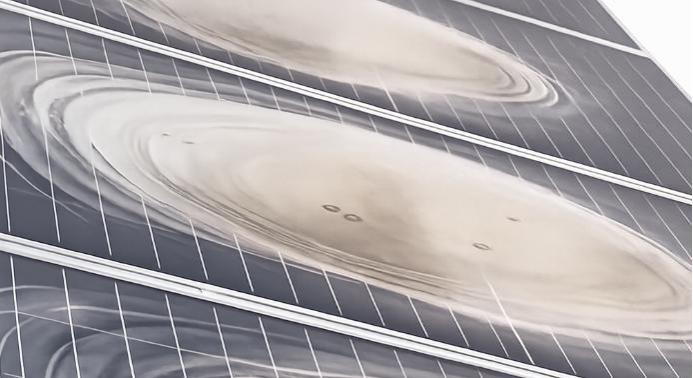
光伏行业在追求功率提升和降本的驱动下,仍在不断扩大组件尺寸,但这种做法带来了日益严重的质量隐患。业界将因组件中间凹陷积水、易破裂等问题的组件称为"养鱼组件"1。目前流通的超大尺寸组件达到2384mm×1303mm,面积达3.1平米1,与标准规格相比,其形变量增加1-3倍、动态载荷仅为标准组件的10%、安装破损率也增加数倍1。
虽然2023年7月隆基绿能、晶科能源等9家龙头企业曾就"黄金尺寸"达成共识,将组件标准化尺寸定在2382mm×1134mm1,但这一协议在市场竞争压力下并未得到有效遵守。为扭转这一局面,国家近期采取行动。7月2日,三项光伏能耗能效强制性国家标准正式批准发布,将于明年1月1日起实施1。其中国家市场监督管理总局、国家标准化管理委员会发布了GB 47739-2026《光伏组件安全要求》1,要求企业从盲目"做大"转向注重"做精",以质量安全为底线。
The photovoltaic industry has faced mounting safety issues stemming from the pursuit of increasingly larger component dimensions. Problems such as panel sagging, water accumulation in the middle sections, and increased brittleness have emerged as manufacturers prioritize size expansion 1. These defects pose significant risks to installation and long-term durability.
Although nine leading enterprises, including LONGi Green Energy and JinkoSolar, established a "golden size" consensus in July 2023, setting the standardized component dimensions at 2382mm×1134mm 1, oversized panels remain prevalent in the market. Current oversized components measure 2384mm×1303mm with a surface area of 3.1 square meters 1. Compared to standard-sized components, these larger panels experience 1 to 3 times greater deformation, exhibit dynamic load capacity that is only 10% of standard components, and show installation damage rates several times higher 1.
In response to these growing concerns, the government has intervened with new regulatory standards. Three mandatory national energy efficiency standards for photovoltaic products were officially approved and issued on July 2 1, with implementation set to begin on January 1 of the following year. The State Administration for Market Regulation and the Standardization Administration of China released GB 47739-2026, "Safety Requirements for Photovoltaic Modules" 1, signaling a shift in industry priorities from merely "expanding size" to "improving quality," with product safety established as the baseline requirement 1.
评论
还没有评论,欢迎留下第一条。