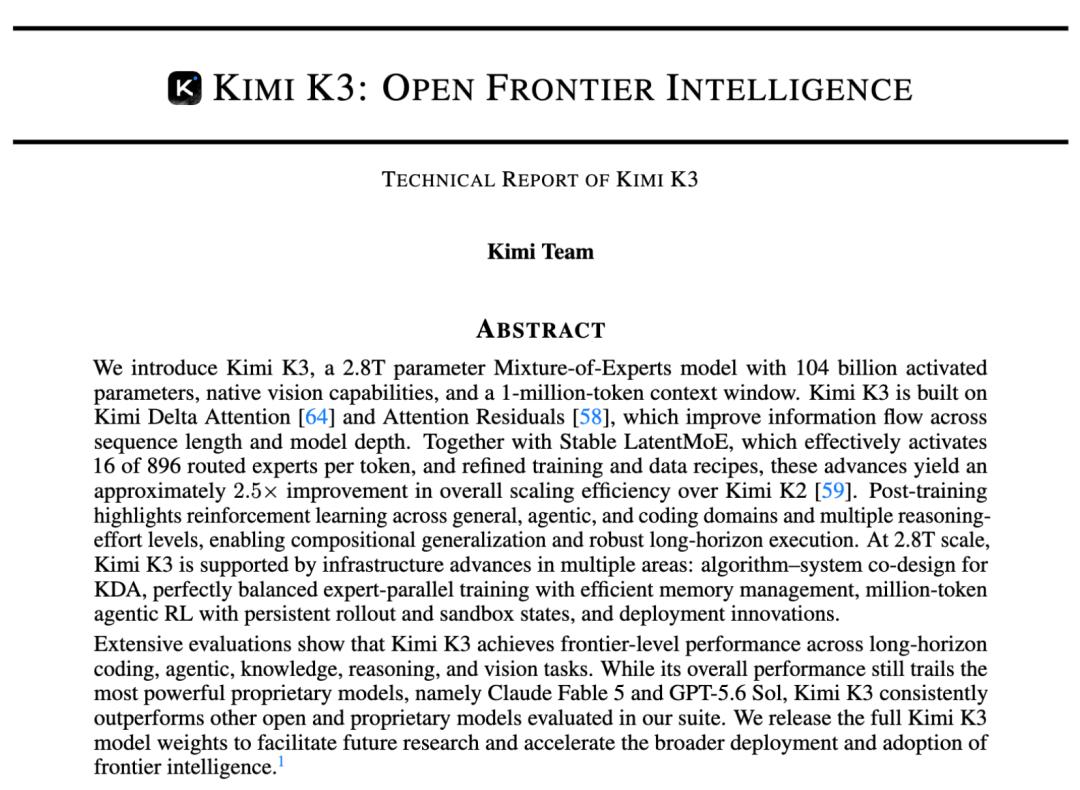
月之暗面正式向全球开放Kimi K3模型权重及技术细节,同时启动Kimi全球大使计划。1Kimi K3是参数总量达2.8万亿的混合专家模型,支持1M超长上下文和原生视觉理解能力。12这是迄今规模最大的开源权重模型。2在性能上,K3在Arena.ai前端代码排名中位列第一,在Artificial Analysis智能指数中排名第三。1规模化效率相比K2.5提升了2.5倍,每百万token输出定价约为15美元,仅为美国头部闭源模型的三分之一至一半。2
除模型权重外,月之暗面同步开放了MoonEP、FlashKDA和AgentEnv三项关键基础设施技术。1全球大使计划面向开发者社区、校园、创业公司、写作者、研究者等招募,推进产品在真实工作流中的应用。1Kimi K3上线后48小时内用户请求量大幅超出预期,随后暂停了新增会员订阅。1
此举引发硅谷广泛关注。2英伟达CEO黄仁勋随即发起公开信由25家公司联署支持开源模型,随后扩大至50家。2英伟达与微软联合发起开放安全AI联盟,成员包括近40家机构。2微软正在评估Kimi K3用于Copilot的可能性,计划将其接入Azure。1
Moonshot AI has officially released the Kimi K3 model weights and technical specifications to the global community while simultaneously launching a worldwide ambassador recruitment initiative.1 The K3 model, featuring 2.8 trillion parameters as a mixture-of-experts architecture, represents the largest open-weight model released to date and is approximately three times larger in scale compared to the preceding K2.5 version.12 The model supports a 1 million token context window and includes native visual understanding capabilities, positioning itself competitively on major performance benchmarks.1
Beyond the model release, Moonshot AI has open-sourced three critical infrastructure technologies: MoonEP, FlashKDA, and AgentEnv.1 The company simultaneously introduced the global ambassador program targeting developers, academic institutions, startups, writers, and researchers to advance real-world applications.1 K3 output costs approximately 15 US dollars per million tokens, representing roughly one-third to one-half the cost of leading closed-source American models.2 The model demonstrated such strong initial demand that within 48 hours of launch, user requests dramatically exceeded expectations, prompting the platform to temporarily suspend new membership subscriptions.1 Microsoft is currently evaluating the integration of Kimi K3 into its Copilot offering with plans to make it available through Azure.1
The release has triggered significant reverberations across the technology industry, with semiconductor stocks momentarily entering bear market territory and Nasdaq futures declining accordingly.2 Nvidia CEO Jensen Huang initiated an open letter signed by 25 companies in support of open-weight models, which subsequently expanded to 50 signatories, and co-launched an Open Secure AI Alliance with Microsoft involving nearly 40 member institutions.2 Huang's statement characterizing Chinese open-source models as "performing excellently" directly contradicts the regulatory posture of White House officials.2
评论
还没有评论,欢迎留下第一条。