长鑫存储于7月27日在科创板上市,开盘价49.50元,较发行价8.66元暴涨472%1,收盘价49元,市值达3.28万亿至3.31万亿元35,一举成为A股市值最高的上市公司3。这是科创板开板以来市值最高的公司,也首次刷新A股单日成交额破千亿纪录3。
作为全球第四大DRAM厂商,长鑫存储的上市打破了三星、SK海力士和美光的市场垄断格局。2026年一季度,公司营业收入达508亿元人民币,同比增长719%;归属母公司净利润247.62亿元,同比增长1688%3。当前长鑫在全球DRAM市场占有率约8%,仅次于三星(36%)、SK海力士(29%)和美光(24%)1。公司预计2026年上半年营业收入达1100亿至1200亿元,归属母公司净利润达500亿至570亿元3。
长鑫存储的上市引发美股存储芯片板块大幅震荡。美光股价下跌5%1,闪迪暴跌11%以上3,SK海力士美股ADR下跌8.5%1,阿斯麦、超威半导体和英伟达等也跌幅超5%3。
长鑫存储此次IPO募资295亿元,创科创板历史纪录1。公司创始人、董事长朱一明做出罕见的个人让利承诺,将其持有的15.36亿股中的50%(7.68亿股)分配给员工作为激励,对应市值超340亿元,且该方案不稀释外部股东权益2。激励分两个五年周期落地:前五年完成3.84亿股分配,剩余3.84亿股在第六至第十年分批发放2。员工若在股份完整兑现前离职,未归属的剩余股份将被收回2。
朱一明同时承诺上市后第一个十年不转让所持股份,第二个十年每年最多减持20%2。长鑫存储十年来员工规模从几百人增长到近2万,其中研发人员6259人,占比32.43%2。上市前股权激励覆盖6760人次,人均可分得超三千万元5。
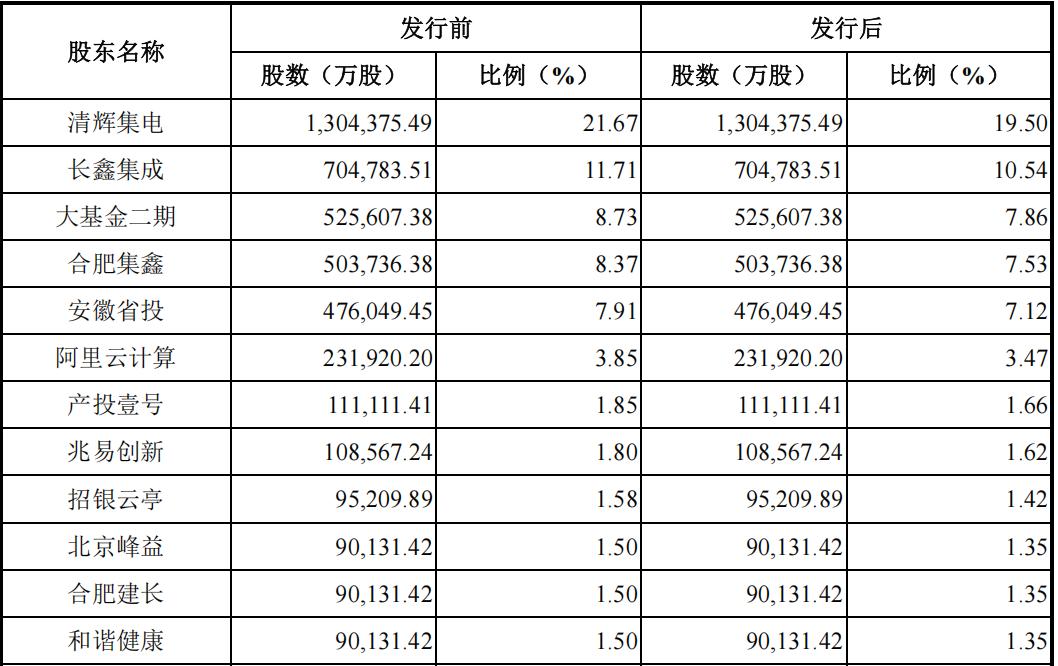
上市首日,合肥国资、国家集成电路产业投资基金二期、阿里、腾讯等主要股东获得巨额账面浮盈。其中,合肥国资10年累计投入约248亿元,账面浮盈达约万亿元5;大基金二期上市当日持股市值达2578亿元5;阿里系上市当日持股市值约1469亿元,浮盈约1400亿元5。小米全资子公司壹捌壹零通过战略配售获得1824.48万股,投入1.58亿元,按首日股价计算浮盈约7.17亿元6。
尽管长鑫存储成绩斐然,但仍面临技术瓶颈。公司无法获得ASML的EUV光刻设备,在高端AI存储HBM领域落后两个技术世代1。此外,长鑫已被列入美国国防部1260H名单,面临出口管制限制1。
Changxin Storage completed its listing on Shanghai's STAR Market on July 27, 2026, with opening price of 49.50 yuan per share, representing a 472% surge from the issue price of 8.66 yuan 1. The company's market capitalization reached 3.31 trillion yuan at opening, making it the most valuable company ever listed on the STAR Market 1. The IPO raised 29.5 billion yuan, setting a record for the STAR Market 1. At the day's close, the stock price settled at 49 yuan per share with a market value of approximately 3.28 trillion yuan 3. First-day trading volume reached 141.187 billion yuan, marking the first time any single A-share stock exceeded 100 billion yuan in daily turnover 6.
Changxin's rapid ascent reflects its commanding position in the global memory market. As of the first quarter of 2026, the company held 8% of the global DRAM market share, ranking fourth worldwide after Samsung at 36%, SK Hynix at 29%, and Micron at 24% 1. The company reported first-quarter 2026 revenue of 50.8 billion yuan, up 719% year-over-year, with net profit attributable to shareholders reaching 24.762 billion yuan, a 1,688% increase 3. Nomura Securities projects Changxin's global DRAM production capacity share will expand from 10% to 18% by 2028 1.
The IPO reverberated sharply through U.S. memory chip equities. Micron fell 5%, while SanDisk declined more than 11% on the day 13. SK Hynix's American Depositary Receipts dropped more than 7%, closing at 143.02 dollars, below its July 10 issue price 3. The broader semiconductor sector also faced pressure, with ASML, Advanced Micro Devices, and NVIDIA each declining more than 5% 3.
Major Chinese investors captured substantial unrealized gains from the listing. Hefei state-owned enterprises, which invested approximately 24.8 billion yuan cumulatively over a decade, recorded unrealized gains exceeding 1 trillion yuan 5. Alibaba's combined holdings generated over 160 billion yuan in paper gains on a cumulative investment of approximately 7.6 billion yuan, representing a return multiple exceeding 20 times 6. Nio invested 158 million yuan and realized approximately 740 million yuan in paper gains, a return rate surpassing 465% 6. Xiaomi's wholly-owned subsidiary 181010 acquired 18.244 million shares through strategic allocation for approximately 158 million yuan, with first-day paper gains of approximately 717 million yuan 6.
Founder and Chairman Zhu Yiming pledged to distribute 50% of his 1.536 billion shares—7.68 billion shares valued at over 340 billion yuan—to employees across two five-year cycles 2. Under the incentive plan, the company will distribute 3.84 billion shares in the first five years, with the remaining 3.84 billion shares distributed between years six and ten 2. Employees who depart before full vesting forfeit unvested shares 2. Zhu committed to holding his remaining shares for the first decade post-listing, with maximum annual reductions of 20% permitted in the second decade 2.
Changxin faces material technical limitations in advanced memory segments. The company remains unable to access ASML's EUV lithography equipment, positioning it two technology generations behind competitors in the high-bandwidth memory (HBM) field 1. Additionally, Changxin appears on the U.S. Department of Defense's 1260H list, subjecting it to export control restrictions 1. Nevertheless, Apple has begun testing Changxin DRAM chips for potential deployment in devices sold in the Chinese market 1.
评论
还没有评论,欢迎留下第一条。