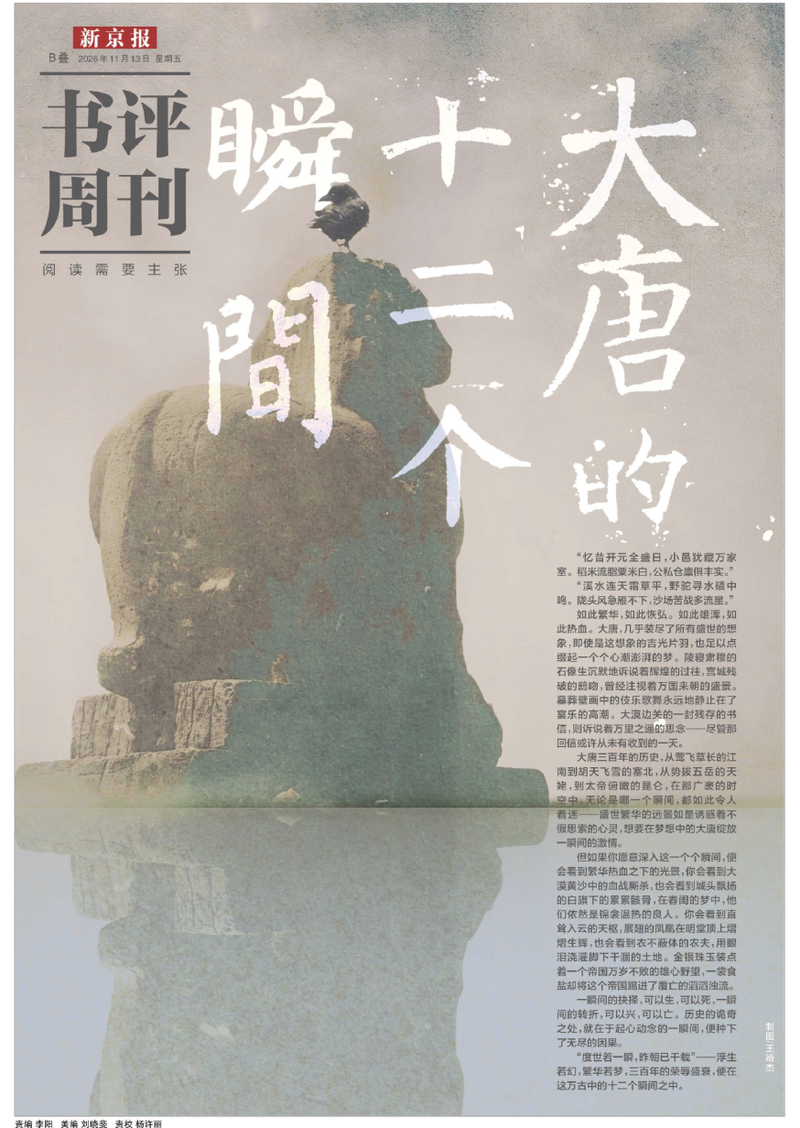
新京报书评周刊刊发谌旭彬的文章,通过剖析宰相武元衡遇刺案、“甘露之变”及黄巢攻陷长安这三个关键历史节点,深入探讨了唐朝衰亡的内在逻辑 1。文章指出,元和十年(815年)六月三日,宰相武元衡遇刺身亡,御史中丞裴度受伤,尽管主要嫌疑人指向成德军节度使王承宗和淄青节度使李师道,但因证据不足及刑讯逼供,该案最终成为悬案 1。此外,神策军在安史之乱后逐渐由宦官掌控,形成左右两军并确立了对禁军的控制传统,这使得宦官势力成为连皇帝也无法制衡的政治力量 1。
大和九年(835年)十一月二十一日发生的“甘露之变”进一步加剧了皇权的危机,李训等人策划伏杀宦官失败,导致包括宰相在内的数百名官员被宦官集团屠杀,唐文宗事后感叹自己受制于家奴 1。到了广明元年(880年)十二月五日,黄巢大军进入长安,迫使唐僖宗逃往蜀中,标志着帝国在政治腐败和社会结构失衡下的必然崩溃 1。黄巢出身盐商家庭,其崛起与唐代盐法改革导致的民间中层社会巨变及私盐贸易网络密切相关 1。值得注意的是,据考据广为流传的《不第后赋菊》并非黄巢所作,极可能是南宋讲史说书艺人编造的作品 1。
A new analysis published by the Beijing News Book Review Weekly examines three critical historical junctures that illustrate the structural decay and ultimate collapse of the late Tang dynasty 1. The study identifies these moments as the assassination of Chancellor Wu Yuanheng, the failed coup against eunuch power known as the Ganlu Incident, and Huang Chao’s capture of Chang’an 1. Through these events, the author argues that political corruption and deep-seated social imbalances rendered the empire’s fall inevitable 1.
The first pivotal moment occurred on June 3, 815 (Yuanhe 10), when Chancellor Wu Yuanheng was assassinated and Censor-in-Chief Pei Du was injured 1. Although Chengde Military Governor Wang Chengzong and Ziqing Military Governor Li Shi Dao were considered primary suspects, the case remained unsolved due to insufficient evidence and reliance on forced confessions obtained through torture 1.
The balance of power shifted decisively during the Ganlu Incident on November 21, 835 (Dahe 9) 1. A plot led by Li Xun to ambush and kill influential eunuchs failed, resulting in the massacre of hundreds of officials, including chancellors, by the eunuch faction 1. Emperor Wenzong lamented his status as a captive of household slaves, signaling the complete subjugation of imperial authority and court officials by eunuch forces 1. This dominance was rooted in the Shence Army, which had come under eunuch control after the An Lushan Rebellion, forming left and right divisions that entrenched their influence over the capital’s guard and made them a force even emperors could not check 1.
The final blow came on December 5, 880 (Guangming 1), when rebel leader Huang Chao entered Chang’an, forcing Emperor Xizong to flee to Shu 1. Huang Chao, born into a salt merchant family, rose to prominence amid social upheavals triggered by salt monopoly reforms, which created a privileged class and expanded networks of private salt trade among the lower strata 1. Notably, the poem "Chrysanthemum After Failing the Examination," traditionally attributed to Huang Chao, is likely a fabrication by Southern Song storytelling artists rather than his actual work 1.
评论
还没有评论,欢迎留下第一条。