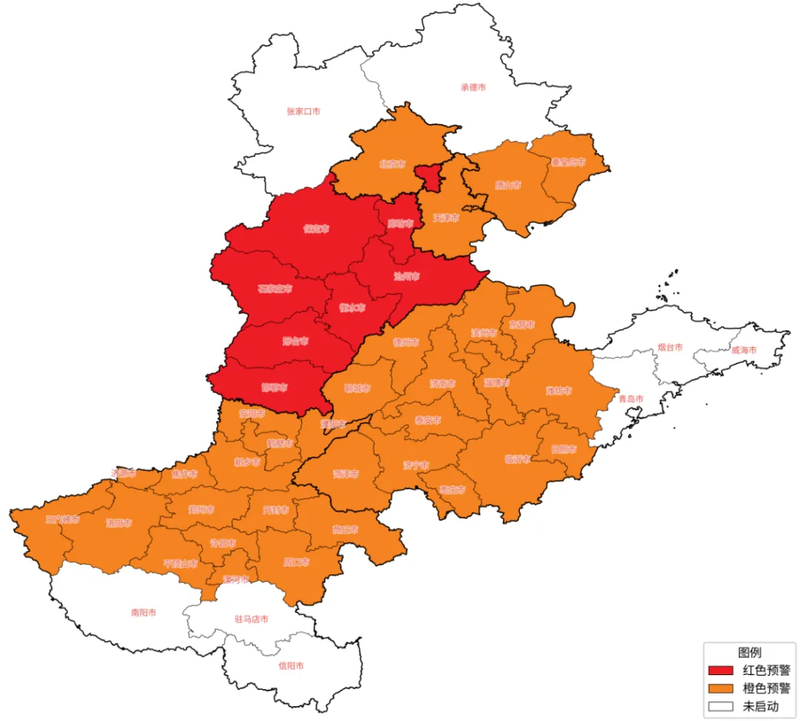
自2026年11月10日起,京津冀及周边地区经历了一次由采暖排放增加与不利气象条件共同引发的PM2.5污染过程 1。截至11月12日,区域内已有38个城市启动重污染天气预警并实施联防联控 1。监测数据显示,此次污染过程中,廊坊地区的PM2.5日均浓度峰值达到81微克/立方米(11月11日),小时浓度峰值则在11月12日12时录得132微克/立方米 1。在预警分级方面,河北有7个城市发布了红色预警,北京、天津等21个城市发布了橙色预警 1。关于具体城市分布,来源1提及山东及河南部分城市也启动了相应级别的应急响应,但未明确列出两省的具体城市数量;来源2指出截至11月13日,共有30多个城市启动了橙色或红色预警 12。
针对本次污染成因,火电供热行业开工率较10月下旬上升了12个百分点,成为推高排放的重要因素 1。北京市生态环境局表示,通过实施应急减排措施,全市主要污染物排放量下降了两成以上,有效使污染级别较预测降低了1至2个等级 2。此外,国家气候中心监测显示,目前赤道中东太平洋已形成有监测记录以来最强的厄尔尼诺事件 2。关于污染发展趋势,专家预测受多股冷空气影响,自11月15日起污染将逐步缓解,空气质量有望恢复至优良水平 1。具体到北京市,预计11月14日将迎来本次污染的峰值,空气质量为中度污染(4级),随后从11月15日凌晨至上午,随着扩散条件改善,空气质量将转为优良 2。
A significant PM2.5 pollution episode began on November 10, 2026, across the Beijing-Tianjin-Hebei region and surrounding areas, driven by increased heating emissions and unfavorable meteorological conditions 1. By November 12, authorities had activated heavy air pollution alerts in 38 cities to implement coordinated prevention and control measures 1. Data from the Joint Center for Tackling Atmospheric Pollution Control indicated that daily average PM2.5 concentrations peaked at 81 micrograms per cubic meter in Langfang on November 11, with hourly peaks reaching 132 micrograms per cubic meter in the same city at noon on November 12 1. The operational rate of thermal power and heating industries rose by 12 percentage points compared to late October, contributing to the surge in emissions 1.
Warning Levels and Local Impacts
The alert system was categorized by severity, with seven cities in Hebei Province under red warnings and 21 cities, including Beijing and Tianjin, under orange warnings 1. In Beijing specifically, an orange heavy air pollution warning was issued at midnight on November 11 2. While Source 1 states that 38 cities had activated alerts by November 12, Source 2 reports that more than 30 cities in the broader region had launched orange or red warnings as of November 13 12. According to the National Climate Center, the current weather patterns are influenced by the strongest El Niño event recorded since monitoring began, occurring in the central-eastern equatorial Pacific 2.
Forecast and Mitigation Measures
Beijing is expected to experience peak pollution levels on November 14, with air quality classified as moderate (Level 4), before improving from early morning through midday on November 15 as diffusion conditions enhance 2. Experts from the Joint Center predict that multiple cold fronts will cause the pollution to dissipate gradually from north to south starting November 15, restoring air quality to excellent or good levels 1. To mitigate the impact, emergency emission reduction measures have been implemented; the Beijing Municipal Ecological Environment Bureau reported that these actions reduced major pollutant emissions by over 20%, effectively lowering the predicted pollution level by one to two grades 2.
评论
还没有评论,欢迎留下第一条。