一项发表于《科学》杂志的研究揭示了约12.5万年前阿拉伯半岛的生态环境与人类活动细节 1。国际研究团队在沙特阿拉伯南部的Mundafan盆地('Uruq Aljelibah)发现了一处古代淡水湖泊遗址,该地点的年代通过光释光测年法及河马牙齿数据被测定为距今约125,000年 1。考古证据显示,这一时期该地区曾是一个淡水湖泊,周围生活着河马和羚羊等动物,构成了所谓的“绿色阿拉伯”环境,这有助于理解早期智人在走出非洲期间如何适应当地环境 1。
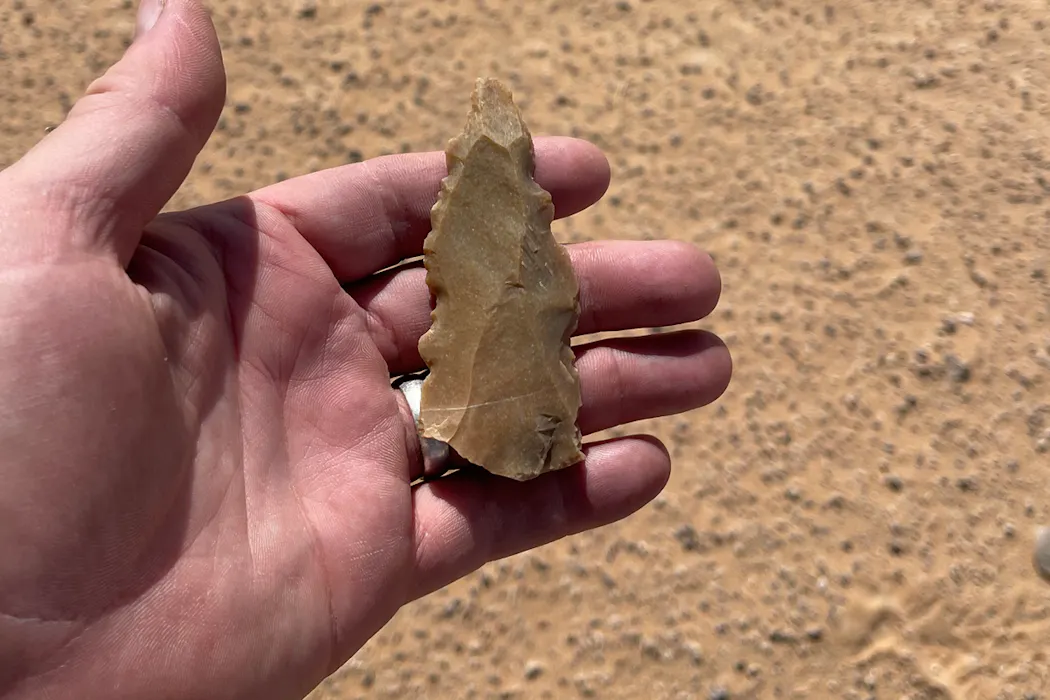
研究人员在该湖岸遗址收集并分析了超过5,500件石器工具和碎片 1。通过对石尖进行化学分析,科学家发现了与箭毒树(arrow-poison tree)相关的毒素残留,证实了当时的人类已使用植物毒素辅助狩猎 1。这一发现比此前报道的南非案例早了约65,000年,将已知最早的毒猎行为记录提前了约6.5万年 1。
除了狩猎武器,遗址中还出土了用于加工棕榈、芦苇等植物的锯齿状石器以及植物纤维残留物 1。这些遗存表明,早期智人不仅利用毒素获取食物,还熟练地加工植物以制作各类工具 1。
An international research team has published new findings in the journal Science detailing life around a freshwater lake in southern Saudi Arabia’s Mundafan Basin approximately 125,000 years ago 1. The study reveals that early Homo sapiens utilized plant toxins to aid in hunting, a discovery that pushes back the earliest known record of this behavior by roughly 65,000 years compared to previously reported cases from South Africa 1. This evidence provides critical insight into how our ancestors adapted to the "Green Arabia" environment during their expansion out of Africa 1.
The researchers analyzed more than 5,500 stone tools and fragments collected from the lakeshore site, where hippopotamuses and antelopes also lived 1. Chemical analysis of the stone points detected residue associated with the arrow-poison tree, confirming the intentional use of toxins in hunting strategies 1. In addition to weapon tips, the team identified serrated stone tools used for processing plants such as palms and reeds, alongside traces of plant fibers, indicating diverse subsistence activities 1. The age of the site was determined through optically stimulated luminescence dating and data derived from hippopotamus teeth 1.
评论
还没有评论,欢迎留下第一条。