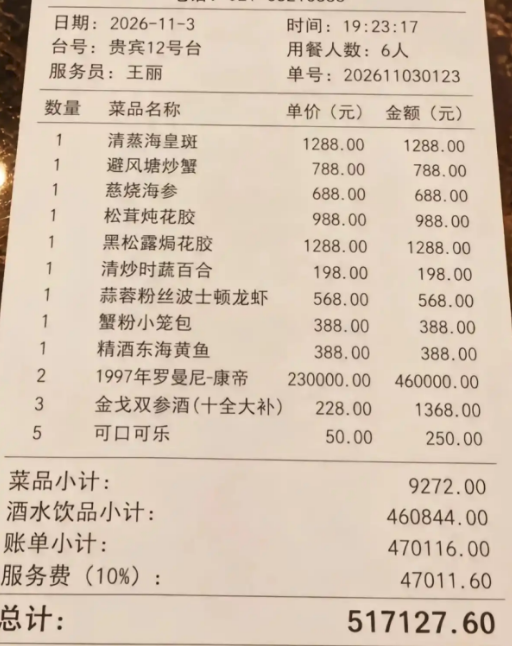
11月8日,一张显示上海和平饭店6人餐消费逾51万元的图片在网络流传,引发舆论关注 1。该虚假小票明细包括菜品费1288元、酒水费23万元以及服务费4.7万余元 1。对此,和平饭店明确回应称该消费凭证系网友伪造,内容不实 1。上海警方表示,已指派相关警种对该起编造虚假账单的事件介入处置 1。
媒体评论指出,此类行为旨在通过编造虚假凭证迎合大众心理以博取流量,不仅损害了商家的商业信誉,还强化了社会的刻板印象 1。作为对比案例,2018年曾发生上海“西郊5号”餐厅40万元“天价账单”事件,但当时经核实账单属实,与本次伪造性质不同 1。评论呼吁平台与涉事主体重视此类投机行为 1。
On November 8, a receipt allegedly detailing a meal for six people costing over 510,000 yuan at the Shanghai Peace Hotel circulated on social media 1. The purported charges included 230,000 yuan for beverages and more than 47,000 yuan in service fees alongside food costs of 1,288 yuan 1. The hotel swiftly refuted these claims, stating that the receipt was forged by an internet user and did not represent any actual transaction 1. In response to the controversy, Shanghai police confirmed that relevant divisions have been assigned to investigate the incident 1.
Commentators noted that such fabrications are often designed to exploit public fascination with excessive wealth for traffic purposes, thereby damaging the commercial reputation of legitimate businesses and reinforcing negative stereotypes 1. This case contrasts sharply with a verified 2018 incident involving the Shanghai restaurant "Xijiao No. 5," where a similar high-value bill of 400,000 yuan was proven to be authentic 1. Authorities and platforms are urged to take seriously these speculative behaviors that mislead the public through false evidence 1.
评论
还没有评论,欢迎留下第一条。