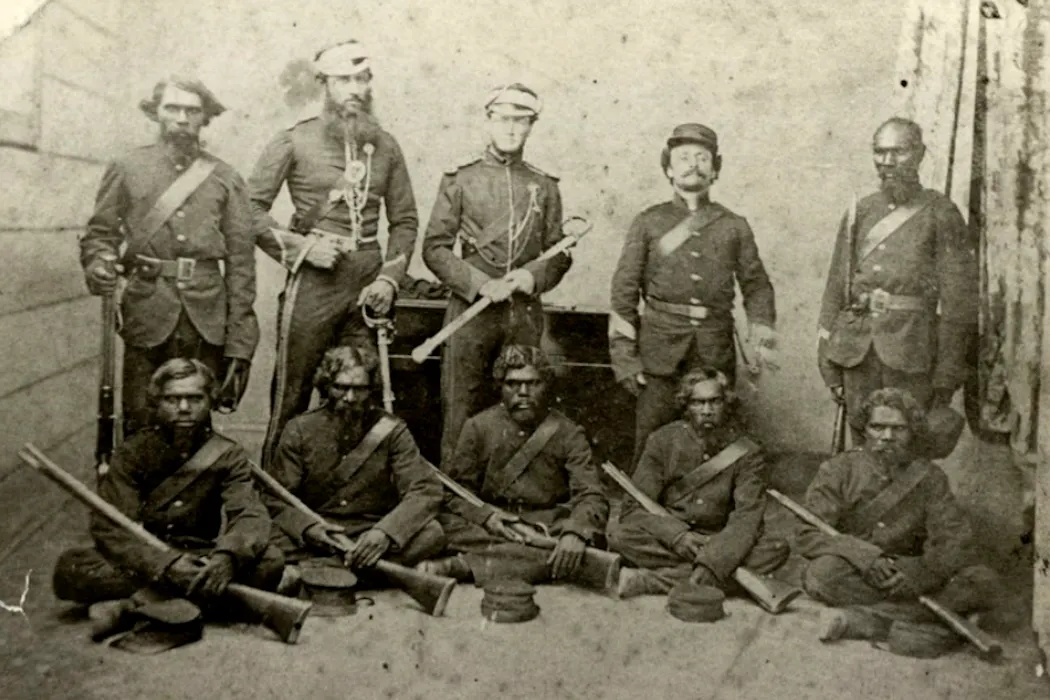
悉尼大学出版社出版了由Heather Burke、Lynley A. Wallace和Bryce Barker合著的学术著作《Buried: Archaeology, frontier conflict and the Queensland Native Mounted Police》,该书运用“历史考古学”方法深入调查了昆士兰原住民骑警(QNMP)的营地 1。这一武装力量运作于1849年至1929年间,研究指出其可能导致超过40,000名传统原住民非正常死亡,被称为殖民澳大利亚“最无情的杀戮机器” 1。通过结合考古发掘与档案资料,作者们修正了此前关于该部队规模的数据:将可能的营地数量从Jonathan Richards估计的85个修订为176个可能营地或156个确定营地,白人军官人数从269人增加至447人,原住民士兵人数约为1,027人 1。此外,书中统计记录了超过2,800起边境冲突事件 1。
在2016年至2020年间,研究人员调查了26个营地并发掘了8个,主要发现了带有政府徽章的金质纽扣、餐具碎片和玻璃碎片等生活用品 1。然而,作者强调仅靠这些物质遗存难以完全揭示暴力的本质,因此仍需依赖传统历史研究及未被充分挖掘的个人日记等档案资料来还原真相 1。例如,Millais Culpin在1892年至1897年间的书信集提供了关于当地种族关系和暴力的详细目击记录 1。书中还列举了具体案例,如1896年Donald Mackenzie被杀后,原住民骑警展开追踪导致多人死亡,据记载现场“每隔一英里左右就有一具尸体” 1。
A new academic study titled Buried: Archaeology, frontier conflict and the Queensland Native Mounted Police utilizes a "historical archaeology" approach to investigate the camps operated by the Queensland Native Mounted Police (QNMP), an armed force that functioned between 1849 and 1929 1. Authored by Heather Burke, Lynley A. Wallace, and Bryce Barker, and published by Sydney University Press, the book reveals the extensive scale and destructive nature of this paramilitary group during the colonial era 1. The research estimates that the QNMP’s operations may have contributed to more than 40,000 unnatural deaths among traditional Aboriginal people 1.
Through fieldwork conducted between 2016 and 2020, the authors surveyed 26 camps and excavated eight, uncovering everyday artifacts such as gold buttons bearing government badges, broken crockery, and glass fragments 1. These physical findings were integrated with archival records to significantly revise previous historical data; the total number of possible police camps was corrected from Jonathan Richards’ estimate of 85 to 176 potential sites, while the confirmed count stands at 156 1. The study also increased the identified number of white officers from 269 to 447, noting approximately 1,027 Aboriginal troopers served in the force 1. Furthermore, the book documents over 2,800 instances of frontier conflict 1.
The authors acknowledge that while material culture provides evidence of presence, it alone cannot fully expose the brutality of the QNMP, necessitating reliance on traditional historical research and underutilized personal archives 1. One significant overlooked source highlighted is the correspondence of Millais Culpin, who served between 1892 and 1897, offering detailed eyewitness accounts of local race relations and violence 1. For instance, following the murder of Donald Mackenzie in 1896, the book cites reports describing how pursuing Aboriginal police left bodies scattered across the landscape, with corpses found “every mile or so” along their path 1.
评论
还没有评论,欢迎留下第一条。