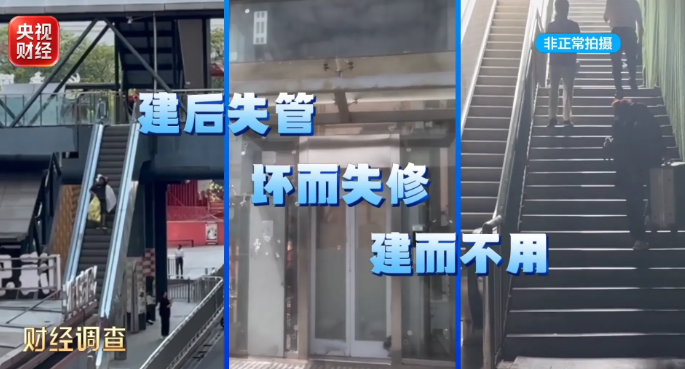
央视《财经调查》近日曝光了江西赣州、贵州贵阳及广西桂林等地公共便民电梯“建而不用”的现象,引发社会关注1。具体而言,赣州一处无障碍电梯建成两年仍未通电;贵阳一台扶梯因泡水停运长达五年;桂林天桥上的扶梯则长期闲置1。
针对上述问题,赣州蓉江新区住房和城乡建设局于11月9日发布通报称,已成立调查组开展核查工作,并将依法依规推进问题整改1。
新京报快评指出,此类问题源于“重建设、轻管护”及机制断层,背后存在缺钱、缺人、缺考核三大病灶1。评论批评了“不曝光不解决”的被动式治理模式,呼吁建立全生命周期管护机制,并将设施使用率纳入考核体系,以确保便民服务落到实处1。
A CCTV finance investigation has exposed the widespread issue of unused public convenience elevators across several regions, including Ganzhou in Jiangxi, Guiyang in Guizhou, and Guilin in Guangxi. 1 The report highlighted specific instances of infrastructure that was constructed but never properly maintained or utilized, such as an accessible elevator in Ganzhou that remained without electricity for two years after completion, a flooded escalator in Guiyang that had been out of service for five years, and idle bridge escalators in Guilin. 1
In response to these revelations, the Housing and Urban-Rural Development Bureau of Rongjiang New District in Ganzhou issued a statement on November 9 announcing the establishment of an investigative team. 1 The bureau confirmed that it would verify the details of the situation and proceed with rectifying the problems in accordance with laws and regulations. 1 Commentary from Beijing News attributed the failures to a systemic emphasis on construction over maintenance, noting deficiencies in funding, personnel, and performance assessments. 1 Critics argue that this "reactive governance" model, where issues are addressed only after being publicly exposed, highlights the need for full-lifecycle management mechanisms that include usage rates in official evaluations. 1
评论
还没有评论,欢迎留下第一条。