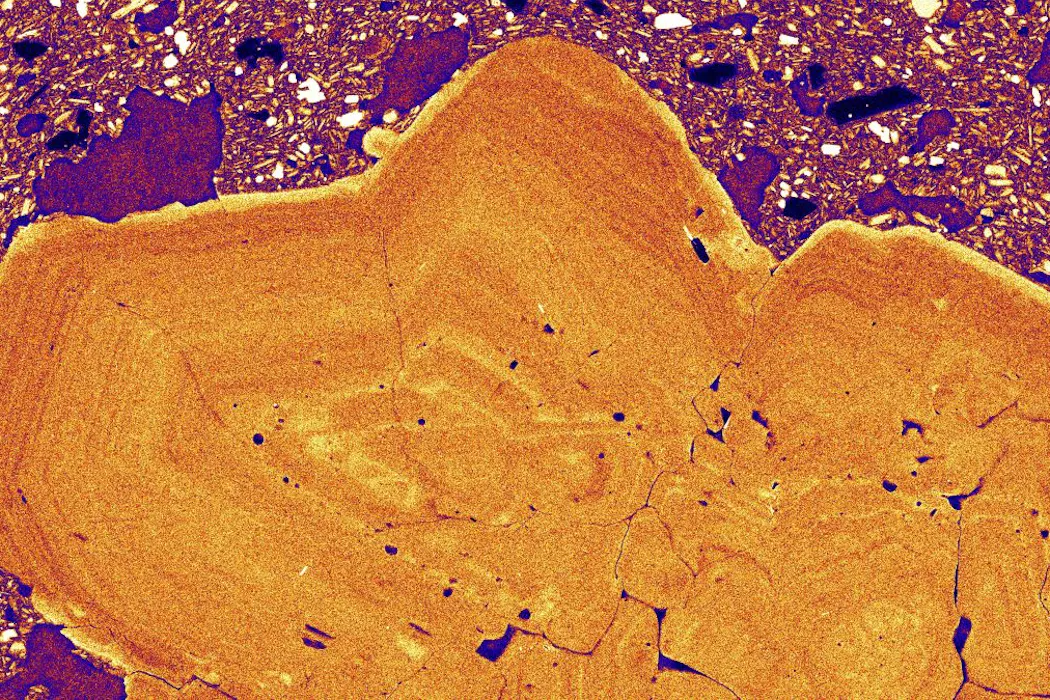
昆士兰大学研究团队在《自然通讯》期刊发表最新成果,揭示了利用火山矿物晶体预测喷发时间的潜力1。研究发现,太平洋火环地区火山中最丰富的矿物斜长石(plagioclase),在喷发前夕会形成具有特定形状和化学成分的微小晶体,即“微晶”1。这些微晶记录了高温岩浆补充低温岩浆库的过程,该特征在不同火山间表现出全球共性1。
研究人员指出,不同时期形成的斜长石晶体蕴含着不同的地质信息。较早形成、钙含量较低的晶体反映的是无法喷发并正在地壳中积累冷却的岩浆;这类不可喷发的岩浆可能富集铜等关键金属,或仅在黄石超级火山等极端情况下发生喷发1。相比之下,喷发前夕形成的最小斜长石晶体具有相同的化学成分,表明热岩浆正在注入冷岩浆库1。通过分析这些晶体的“指纹”,科学家有望识别出看似平静但即将发生喷发的火山,从而为火山监测和预警提供新的技术手段1。
A new study published in Nature Communications suggests that tiny mineral crystals found in Pacific Ring of Fire volcanoes can serve as early warning indicators for impending eruptions 1. Researchers discovered that plagioclase, the most abundant mineral in these volcanic systems, develops specific shapes and chemical fingerprints shortly before an eruption occurs 1. This finding offers a potential tool to identify volcanoes that appear dormant but are actually on the verge of erupting 1.
The core mechanism relies on analyzing "microcrysts," which are the smallest plagioclase crystals formed during the critical pre-eruption phase 1. These microcrysts exhibit identical chemical compositions, signaling that hot magma is actively replenishing cooler magma chambers 1. In contrast, earlier-formed plagioclase crystals with lower calcium content reflect magma that is accumulating and cooling within the crust without leading to immediate eruptions 1. Daniela Parra-Encalada and Teresa Ubide from the University of Queensland led this research, highlighting that such non-eruptive magma processes may also contribute to the enrichment of key metals like copper or result in rare, extreme events such as those at the Yellowstone supervolcano 1.
评论
还没有评论,欢迎留下第一条。