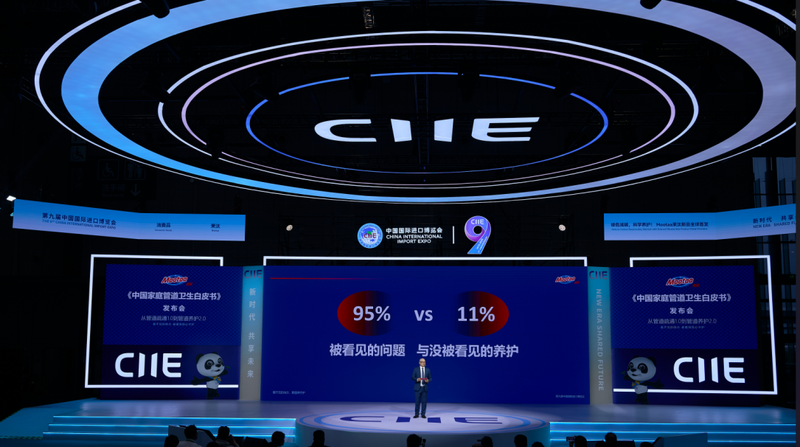
在第九届中国国际进口博览会期间(11月5日至10日),欧洲家居清洁品牌Mootaa茉汰联合艾瑞咨询于上海发布了《2026中国家庭管道卫生白皮书》1。该报告旨在推动行业从“堵了才通”的1.0时代迈向“定期养护”的2.0阶段,倡导消费模式从被动疏通向主动预防性养护转变1。数据显示,尽管95%的用户曾受管道问题困扰,但仅有11%的消费者知晓管道需要定期养护,这一认知空白导致中国家庭管道定期养护普及率仅为11%1。相比之下,欧洲的普及率为20%-30%,日本约为50%,而美国则高达约61%1。
除了市场渗透率的差距,白皮书还揭示了国内家庭管道卫生的现状隐患1。统计表明,66%的家庭从未主动清洁过管道,实地采样显示管道内壁细菌量达到马桶坐圈的16倍,另有40%的家庭曾在管道附近发现虫害1。针对有孩、养宠等不同人群的需求,该报告提出了差异化的建议及行业创新方向,试图挖掘巨大的市场潜力并填补消费认知的不足1。
During the ninth China International Import Expo, held from November 5 to 10 in Shanghai, European home cleaning brand Mootaa jointly released the 2026 China Household Pipeline Hygiene White Paper with research firm iResearch 1. The report highlights a significant gap between consumer awareness and actual maintenance practices in Chinese households. While 95% of users have been troubled by pipeline issues, only 11% are aware that pipelines require regular upkeep 1. This low awareness has resulted in a mere 11% penetration rate for routine pipeline maintenance in China, substantially lower than rates observed in Europe (20%-30%), Japan (approximately 50%), and the United States (around 61%) 1.
The white paper underscores critical hygiene deficiencies through specific data. It reveals that 66% of families have never proactively cleaned their pipelines, and field samples showed bacterial levels inside these pipes were 16 times higher than those on toilet seats 1. Furthermore, 40% of households reported finding pests near their pipeline systems 1. To address these challenges, the document advocates for a paradigm shift from "passive dredging"—clearing blockages only when they occur—to "active preventive maintenance," aiming to move the industry from a 1.0 era of "unclog only when blocked" to a 2.0 stage of regular care 1. It also provides differentiated recommendations for specific demographics, such as families with children or pets, aiming to guide industry innovation and unlock potential market growth 1.
评论
还没有评论,欢迎留下第一条。