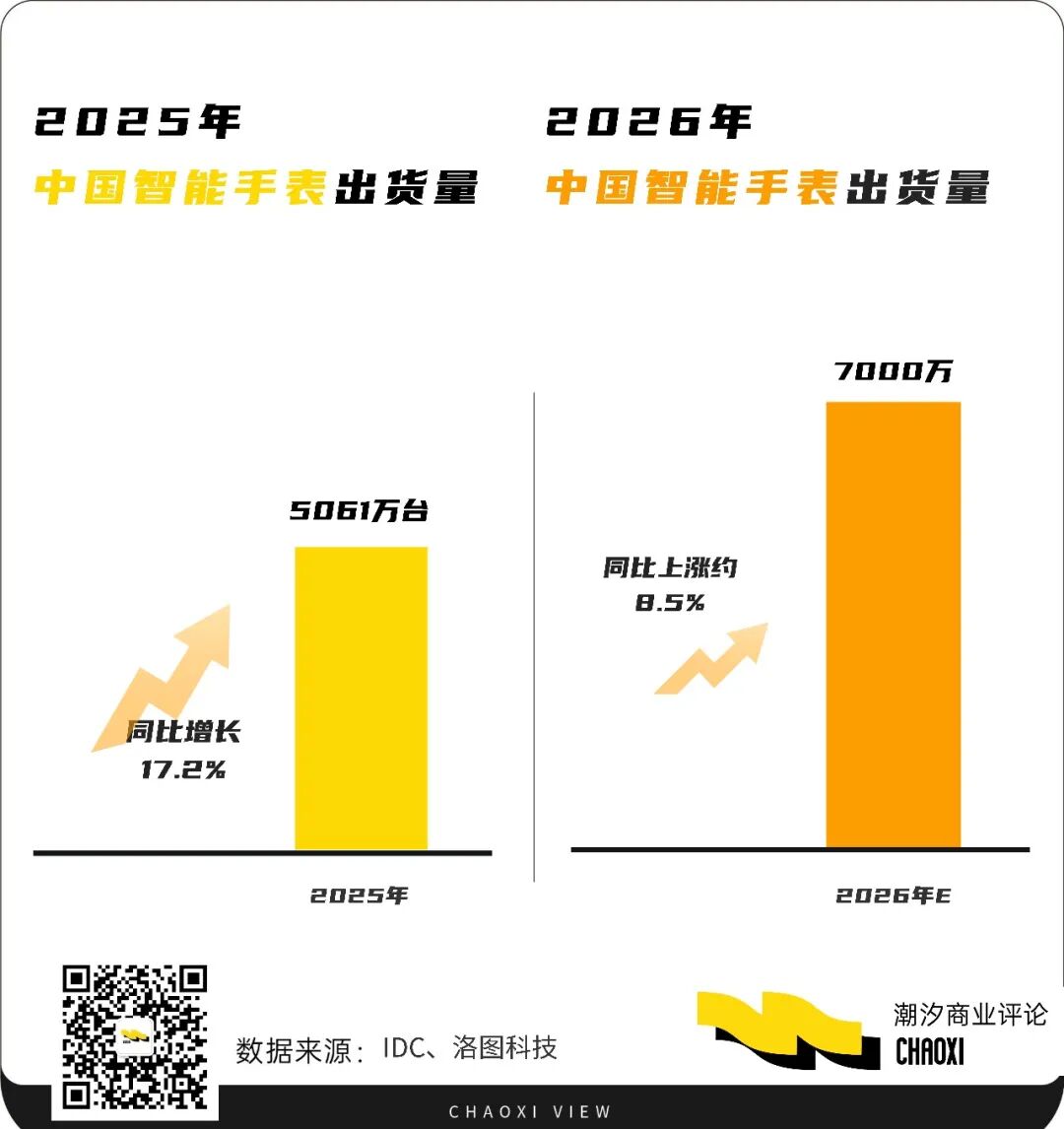
中国智能手表市场规模持续扩大,但用户粘性问题日益凸显。2025年中国智能手表出货量达5061万台,同比增长17.2%1,预计2026年销量将突破7000万台,同比增涨约8.5%1。与此同时,华为、荣耀、小米等国产厂商纷纷推出具有医疗级认证的产品,争夺市场份额。其中华为在2025年第二季度以21%的全球市场份额首次超越苹果1,荣耀手表6 Plus的脉搏波房颤和早搏提示功能已通过国家二类医疗器械注册认证1。然而,大量用户购入后迅速进入"吃灰"状态,反映出智能手表在功能实用性和用户体验上仍存在明显短板。
用户对智能手表功能的使用呈现明显分化。健康和健身追踪功能使用率高达82%,而睡眠追踪功能的使用率仅为26%1,显示出功能冗余和信息疲劳成为用户流失的主要原因。为应对这一困境,厂商采取了多管齐下的策略。荣耀手表6 Plus国补后售价1019元起,华为WATCH GT 6起售价1488元1,通过降低价格门槛扩大用户基数。同时,续航能力成为重要竞争点,荣耀手表6 Plus续航可达35天,华为WATCH GT 6最高续航21天1。这些举措旨在通过深化场景应用、提升续航表现和优化定价,重新唤起用户的使用热情。
China's smartwatch market is experiencing robust expansion, with shipments reaching 50.61 million units in 2025, representing a year-over-year increase of 17.2 percent 1. Projections indicate sales will surpass 70 million units in 2026, growing approximately 8.5 percent compared to the previous year 1. Chinese manufacturers including Huawei, Honor, Xiaomi, OPPO, and Vivo have aggressively entered the market and secured medical-grade certifications, yet many consumers quickly abandon their devices after purchase.
The competitive landscape shifted significantly in the second quarter of 2025, when Huawei captured 21 percent of the global smartwatch market share, surpassing Apple for the first time 1. Honor's Watch 6 Plus gained national Class II medical device registration for its atrial fibrillation and premature beat detection features 1, positioning medical functionality as a key differentiator. Pricing has become increasingly competitive, with the Honor Watch 6 Plus priced from 1,019 yuan after government subsidies, while the Huawei WATCH GT 6 starts at 1,488 yuan 1.
Usage patterns reveal a critical disconnect between device capabilities and actual consumer engagement. Health and fitness tracking commands the highest adoption rate at 82 percent, while sleep monitoring utilization stands at only 26 percent 1, indicating that most consumers use only a fraction of available features. Battery performance varies significantly across products, with the Honor Watch 6 Plus offering up to 35 days of battery life compared to the Huawei WATCH GT 6's maximum of 21 days 1. Manufacturers are attempting to address user engagement through deeper scenario-based applications, improved battery longevity, and competitive pricing strategies, yet the persistent gap between device adoption and sustained usage remains a fundamental challenge in the market's development.
评论
还没有评论,欢迎留下第一条。