苹果计划在2027年6月的WWDC大会上发布代号N50的AI智能眼镜,并在年底正式发售1。这一时间表相比此前的计划明显推迟,原先的目标是在今年进行产品预览、明年开始销售1。
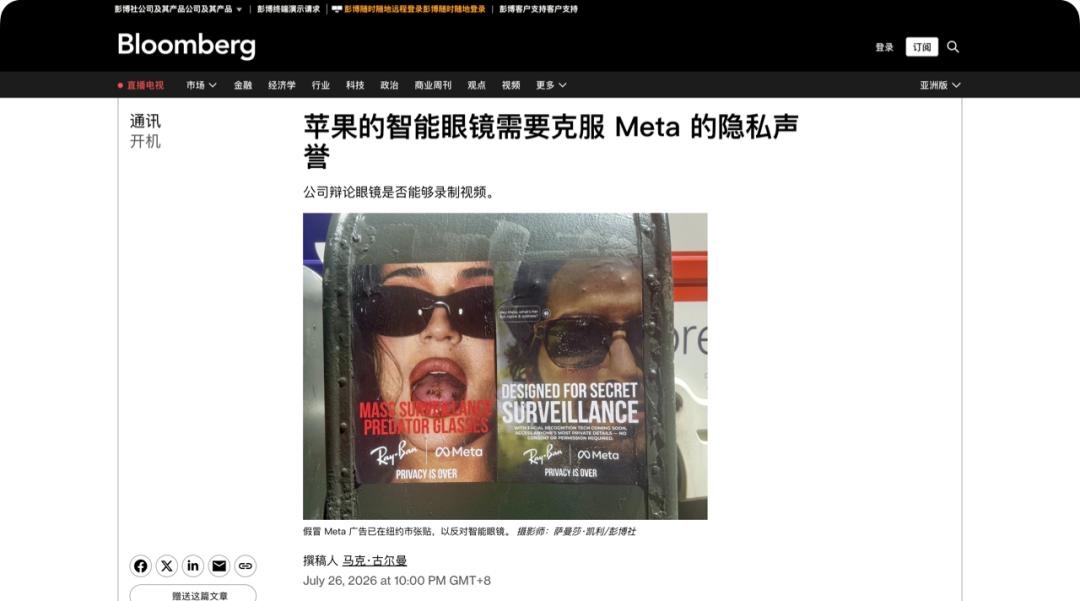
苹果内部在是否搭载摄像头的问题上反复权衡,目前在三种技术路线间摇摆不定:完全取消摄像头、仅限摄像头用于AI分析、或同时支持摄录与AI功能1。这种犹豫背后是对隐私风险的深入考量。智能眼镜设备可能带来的公共隐私威胁包括考场作弊、无感侵入以及数据滥用等问题1。日本早稻田大学曾发生考生利用智能眼镜作弊的案件1,而今年高考中广东、上海、湖北等省市也对佩戴框架眼镜的考生进行专项查验1。
隐私争议并非苹果独有。2025年4月,Meta强行改变隐私政策,默认开启AI摄像功能1。此前在2024年3月,加州法院也受理了一起针对Meta的集体诉讼,指控该公司将家庭视频发送给肯尼亚的数据标注工厂1。
Apple plans to unveil its code-named N50 AI glasses at the Worldwide Developers Conference in June 2027, with commercial availability slated for year-end, marking a significant postponement from earlier timelines that projected a preview this year and market launch next year.1 The delay reflects internal deliberation over three competing technical approaches: entirely eliminating cameras, limiting camera functionality to AI analysis only, or supporting both recording and AI capabilities simultaneously.1
The company faces mounting pressure regarding privacy implications inherent to smart eyewear technology. Public concerns encompass exam fraud—a case at Japan's Waseda University demonstrated how smart glasses could facilitate cheating—unauthorized surveillance, and potential data misuse.1 In response to security risks, several Chinese provinces including Guangdong, Shanghai, and Hubei implemented mandatory inspections of examinees wearing prescription eyeglasses during this year's university entrance exams.1 The industry landscape adds urgency to Apple's deliberations: Meta unilaterally modified its privacy policies in April 2025, switching AI camera features to opt-out rather than opt-in and eliminating the voice recording disable option.1 Additionally, a class action lawsuit filed in California federal court in March 2024 alleges Meta transmitted home video footage to data annotation contractors in Kenya, underscoring risks of vendor mishandling.1
评论
还没有评论,欢迎留下第一条。