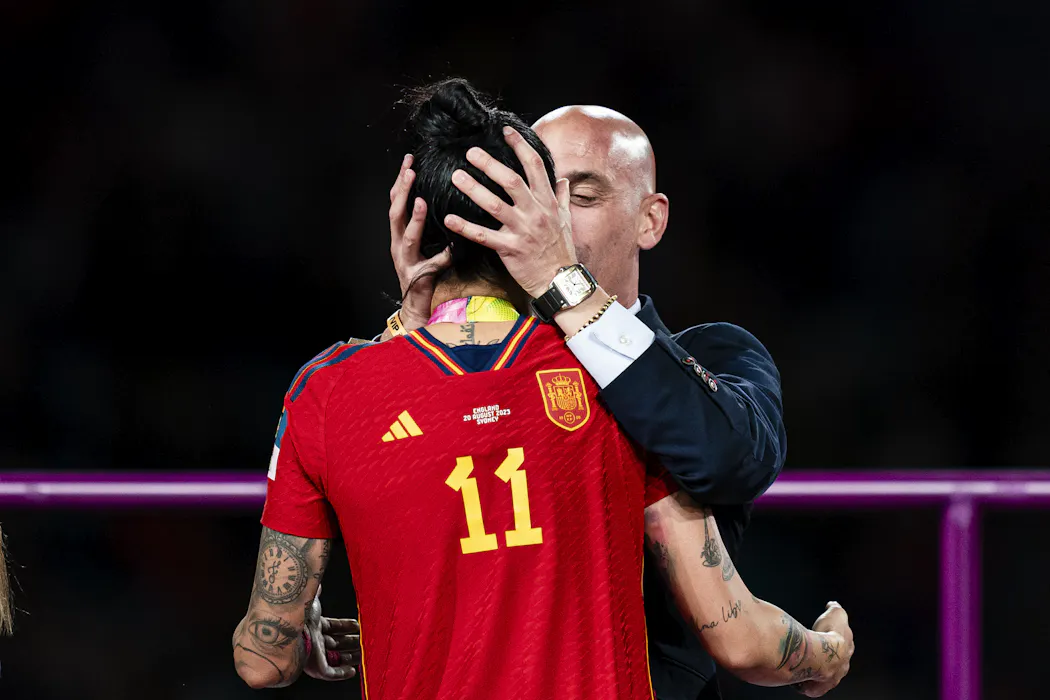
西班牙足协前主席路易斯·鲁维亚莱斯(Luis Rubiales)因强吻球员詹妮·埃尔莫索(Jenni Hermoso)于2025年被定罪,并处以10,800欧元(约合17,000澳元)罚款 1。这一判决反映了社会对未经同意的亲吻认知的转变,而该议题在西方司法与社会文化中的演变历程已超过一个世纪 1。相关分析指出,当代对亲吻中身体自主与性同意的重视,并非仅由近期的#MeToo运动推动,而是百年来女性权利斗争与文化观念演进积累的结果 1。
回顾历史,早期法律普遍将非自愿亲吻视为无害玩笑或情感释放的一部分。1908年,英国法庭曾驳回针对一名追逐并亲吻女孩男子的诉讼,法官当时认为此举属于“游戏的一部分” 1。1945年,在墨尔本二战胜利庆祝活动中,Joseph Valastro强吻女子,法院裁定法律不适用于当晚,理由是年轻人有权释放情感 1。直到1954年,奥地利最高法院仍确认,即使女孩不想被亲吻,亲吻本身也不构成可惩罚的罪行 1。然而,司法观念随后开始转向,1965年意大利最高法院推翻下级判决,裁定“偷吻”属于犯罪行为 1。
在社会倡导层面,女性对强制亲吻的反抗早已存在。1911年,记者夏洛特·汉弗莱(Charlotte Humphrey)在英国《每日快报》发起反对女性间友好亲吻的运动,称大多数女性反感被亲吻 1。1920年代,美国女权主义者伊莫金·雷希廷(Imogene Rechtin)推广“Kiss Not”徽章,以拒绝社交场合中的强制亲吻 1。公众记忆的重构也推动了这一认知的普及,例如1945年纽约时代广场著名的水兵强吻护士照片,在2005年被制成雕像后引发争议,促使公众重新审视其非自愿性质并将其视为性侵犯的象征 1。
The conviction of former Spanish football federation president Luis Rubiales in 2025 marks a significant milestone in the century-long struggle over bodily autonomy and sexual consent regarding unwanted kisses. Rubiales was found guilty and fined €10,800 (approximately A$17,000) for forcibly kissing player Jenni Hermoso 1. This modern legal outcome stands in stark contrast to historical judicial attitudes, where such acts were frequently dismissed as harmless social rituals or inevitable expressions of emotion rather than violations of personal boundaries 1.
Historically, courts across multiple jurisdictions minimized the severity of non-consensual kissing. In 1908, a British court rejected a lawsuit against a man who chased and kissed a girl, with the judge characterizing the act as part of "play" 1. Similarly, during World War II victory celebrations in Melbourne in 1945, Joseph Valastro forced himself upon a woman, but the court ruled that the law did not apply on that night, arguing that young people had a right to release their emotions 1. By 1954, the Austrian Supreme Court affirmed that a kiss did not constitute a punishable crime even if the girl did not want it 1. However, this perspective began to shift; in 1965, the Italian Supreme Court overturned a lower ruling, declaring that "stealing a kiss" was indeed a criminal offense 1.
Beyond the courtroom, feminist movements have long challenged the normalization of compulsory affection. In 1911, journalist Charlotte Humphrey launched a campaign in the UK's Daily Express, asserting that most women disliked being kissed 1. During the 1920s, American feminist Imogene Rechtin promoted "Kiss Not" badges to help women refuse mandatory kissing in social settings 1. The iconic 1945 photograph of a sailor kissing a nurse in New York's Times Square has also undergone reevaluation; when it was turned into a statue in 2005, public debate intensified around its non-consensual nature, leading many to view the image as a symbol of sexual assault 1. These decades of advocacy demonstrate that contemporary emphasis on consent is the result of accumulated feminist efforts to secure control over their own bodies, rather than a sudden change driven solely by recent movements like #MeToo 1.
评论
还没有评论,欢迎留下第一条。