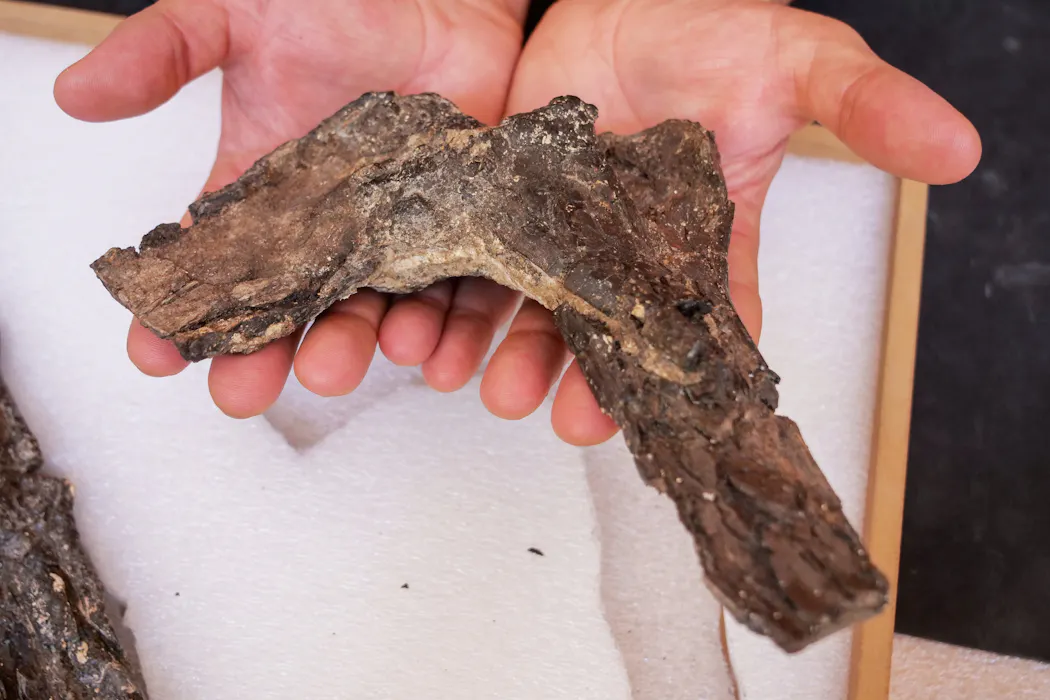
国际科研团队在巴西东北部 Romualdo Formation 发现的一块拥有1.15亿年历史的恐龙化石中,首次直接检测到类似红血球的微观结构以及血红素等血液分子痕迹 1。这一突破性成果发表于《美国国家科学院院刊》,由来自巴西、日本和美国的研究人员共同完成 1。分析显示,这些微观结构位于骨骼的血管道内,并保留了明确的血红素分子指纹 1。该发现证实,在特定条件下,生物软组织中的分子信息能够保存超过1.1亿年,为理解灭绝动物的生物学特性提供了全新的窗口 1。
研究的对象是一只名为 Aratasaurus museunacionali 的恐龙 1。该标本曾在2018年的巴西国家博物馆大火中幸存下来 1。其学名意为“从国家博物馆火灾中诞生的恐龙” 1。
Scientists have detected microscopic structures resembling red blood cells and molecular traces of hemoglobin within a dinosaur fossil dating back 115 million years 1. This represents the first direct evidence that soft tissue molecular information can survive for over 100 million years under specific conditions, opening new avenues for understanding the biology of extinct animals 1. The findings were published in the Proceedings of the National Academy of Sciences by an international research team comprising experts from Brazil, Japan, and the United States 1.
The specimen belongs to the species Aratasaurus museunacionali, which was unearthed from the Romualdo Formation in northeastern Brazil 1. Researchers identified red-blood-cell-like structures located within the bone's vascular channels, accompanied by distinct molecular fingerprints of hemoglobin 1. Notably, this fossil survived the devastating fire at the National Museum of Brazil in 2018, and its scientific name translates to "the dinosaur born from the museum fire" 1.
评论
还没有评论,欢迎留下第一条。