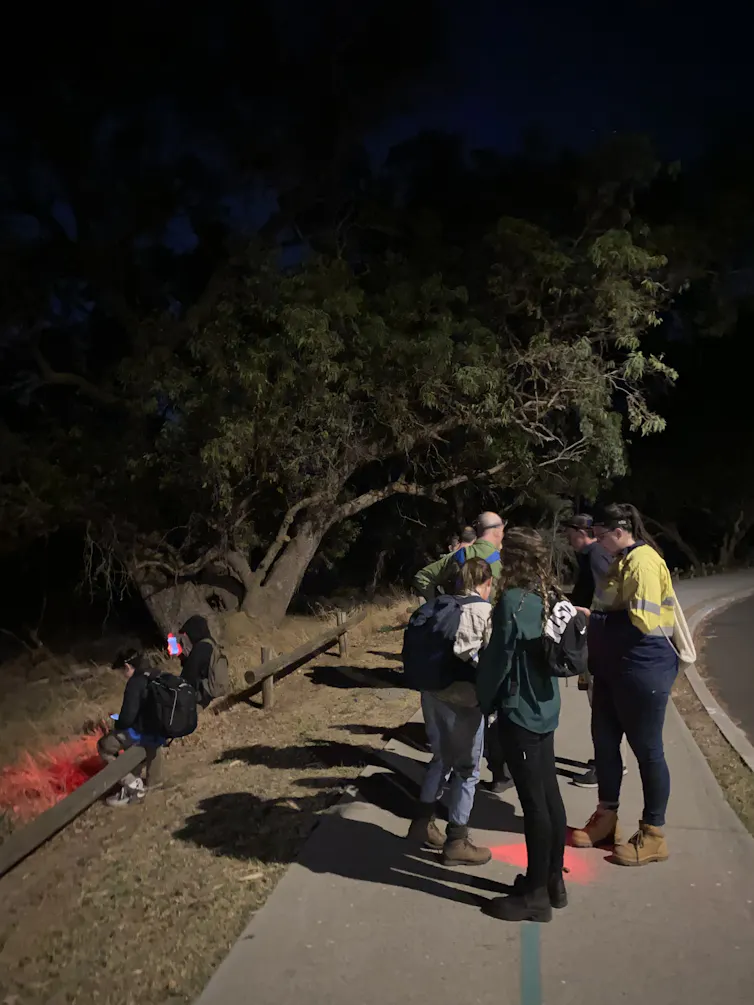
一项于2025年在澳大利亚西澳州珀特旺纳鲁市开展的公民科学项目显示,邀请当地居民使用蝙蝠探测器参与夜间监测,不仅成功记录了当地五种蝙蝠物种,还显著改善了参与者对蝙蝠的认知和态度1。该研究由澳大利亚科学家团队主导,在正式开展实验前,分析了全球范围内已发表的51项关于蝙蝠公民科学研究,以确立方法论基础1。
此次城市监测行动中,志愿者通过23次调查记录到5种不同的蝙蝠物种1。数据显示,古尔德皱唇蝠(Gould's wattled bat)是监测期间出现频率最高的物种1。值得注意的是,研究人员首次在旺纳鲁市范围内检测到了霍氏长耳蝠(Holt's long-eared bat),但并未在市区调查点发现巧克力皱唇蝠(chocolate wattled bats)1。
该研究证实了公民科学在填补蝙蝠分布数据空白及提升公众自然连接感方面的双重价值1。作为背景信息,蝙蝠约占世界哺乳动物物种的22%,而澳大利亚拥有超过80种蝙蝠1。
A citizen science initiative launched in early 2025 in Wonnarua, Australia, successfully engaged local residents in nocturnal bat monitoring, yielding significant ecological data while reshaping public attitudes toward these mammals 1. By inviting community members to participate in bat-hunting tasks using detectors, the project documented five distinct bat species across 23 surveys 1. The most frequently observed was Gould's wattled bat, while Holt's long-eared bat was detected within the Wonnarua city limits for the first time 1. Notably, chocolate wattled bats were not found at any of the urban survey sites during this period 1.
This local effort contributes to a broader scientific context where bats represent approximately 22% of global mammal species, with Australia hosting more than 80 different types 1. To establish the framework for this study, researchers analyzed 51 previously published works on bat-focused citizen science worldwide 1. The findings confirm that such volunteer-driven programs serve a dual purpose: they fill critical gaps in distribution data for hard-to-monitor species and enhance participants' connection to nature 1. Through direct engagement after dark, volunteers gained a clearer understanding of local biodiversity, demonstrating how community involvement can simultaneously advance scientific knowledge and improve public perception of bats 1.
评论
还没有评论,欢迎留下第一条。