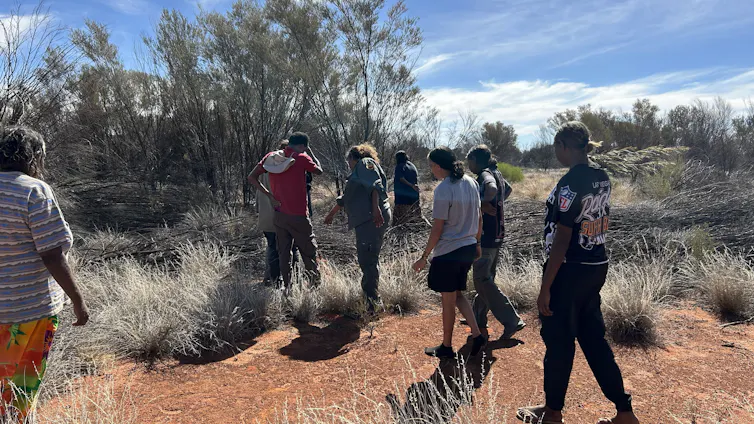
在澳大利亚乌鲁鲁-卡塔丘塔国家公园正式归还给传统所有者 Aṉangu 的第41周年之际,科学家与原住民护林员合作开展的研究揭示了气候变化对当地生态系统的冲击 1。数据显示,2018年至2021年间,该地经历了有记录以来最严重的干旱,且本世纪气温更高、热浪更频繁 1。在2019至2020年破纪录的热浪之后,公园内观察到大量通常强健的植物(如沙漠橡树、mulga等)死亡,数百平方公里出现植被衰退 1。
研究数据显示,不同物种的存活率差异显著:78%的 kurkaṟa(沙漠橡树)幸存,但只有10%的 pukaṟa(desert heath myrtle)幸存 1。植物死亡率差异的原因在于夏季的水分使用策略:低死亡率物种减缓生长以保存水分,而高死亡率物种继续用水生长导致脱水死亡 1。
这一现象不仅威胁本土生态系统,还助长了入侵杂草风车草(buffel grass)的迅速蔓延,后者正在挤占本土植物空间并堵塞水源点 1。目前,Muṯitjulu Mala Rangers 正与 Parks Australia、CSIRO 及多所大学合作,进行相关研究和监测工作 1。
Scientists and Indigenous rangers have confirmed that climate-driven hot droughts are causing widespread vegetation loss in the Uluṟu-Kata Tjuṯa National Park, with significant dieback observed across hundreds of square kilometers following record-breaking heatwaves during 2019–20 1. This environmental shift coincides with the 41st anniversary of the formal return of the land to its traditional Aṉangu owners, a community increasingly concerned about the resilience of their cultural landscape 1. The period between 2018 and 2021 witnessed the most severe drought on record for the region, characterized by higher temperatures and more frequent heat events than previously seen this century 1.
Research data reveals stark disparities in survival rates among native plant species due to differing water utilization strategies. While 78% of kurkaṟa (desert oak) survived the extreme conditions, only 10% of pukaṟa (desert heath myrtle) remained alive 1. Plants with lower mortality rates tended to slow their growth to conserve moisture during summer, whereas those with high mortality continued to grow using available water, leading to fatal dehydration 1. Typically robust species, including desert oak and mulga, suffered substantial losses after the unprecedented heat stress 1.
The ecological imbalance has facilitated the rapid spread of invasive buffel grass, which competes aggressively for space against native flora and obstructs natural water sources 1. To address these growing threats, Muṯitjulu Mala Rangers have collaborated with Parks Australia, CSIRO, and multiple universities to monitor plant health and study the impacts of climate change 1.
评论
还没有评论,欢迎留下第一条。