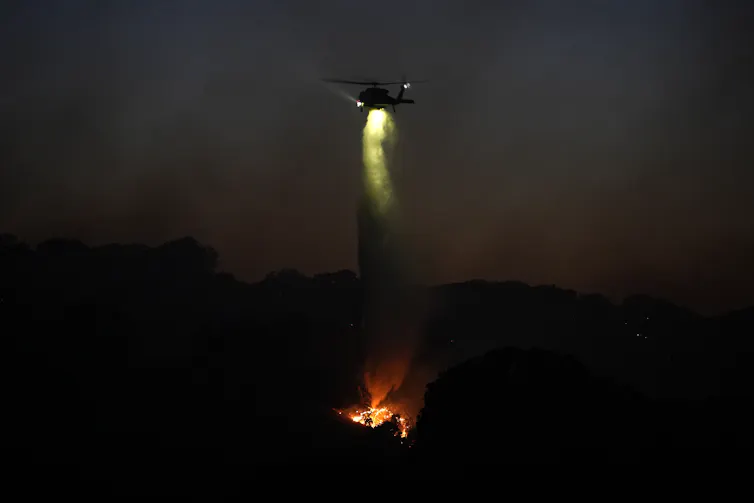
加州今年的野火形势严峻。截至7月24日,加州已记录超过3800起野火,烧毁约79000公顷土地1。其中拉森县最大活跃火灾已超过28000公顷1。这些灾害由极端高温、干旱、强风和多年火灾抑制政策共同驱动1。
气候变化在加州火灾危机中扮演关键角色。美国国家海洋和大气管理局报告指出,气候变化已成为西部美国火灾天气增加的主导驱动力之一1。具体而言,气候变化正在延长西部美国的年度火灾季节约25天1。
澳大利亚面临类似的气候风险。澳大利亚气象局于7月14日确认厄尔尼诺已进行,强度可能成为自1950年以来最强之列1。专家警告,若强厄尔尼诺与正印度洋偶极子同时发生,其干燥影响可能在晚冬和春季相互加强,南部和东部澳大利亚将面临严重山火危险1。
California is experiencing an unprecedented wildfire outbreak driven by a combination of extreme weather and climate shifts. As of July 24, the state had recorded more than 3,800 wildfires that burned approximately 79,000 hectares of land 1. The largest active fire in Lassen County alone has exceeded 28,000 hectares 1.
Climate change is fundamentally altering the fire landscape in western North America. The dangerous conditions that enable wildfires are now occurring roughly 25 additional days per year compared to historical averages, according to research cited by the National Oceanic and Atmospheric Administration, which has identified climate change as a leading driver of increased fire weather in the region 1.
The risks extend beyond California's borders. The Australian Bureau of Meteorology confirmed on July 14 that a strong El Niño is underway, potentially among the most intense since 1950 1. Scientists warn that if this strong El Niño coincides with a positive Indian Ocean Dipole, their drying effects could reinforce each other during late winter and spring, posing severe wildfire dangers to southern and eastern Australia 1.
评论
还没有评论,欢迎留下第一条。