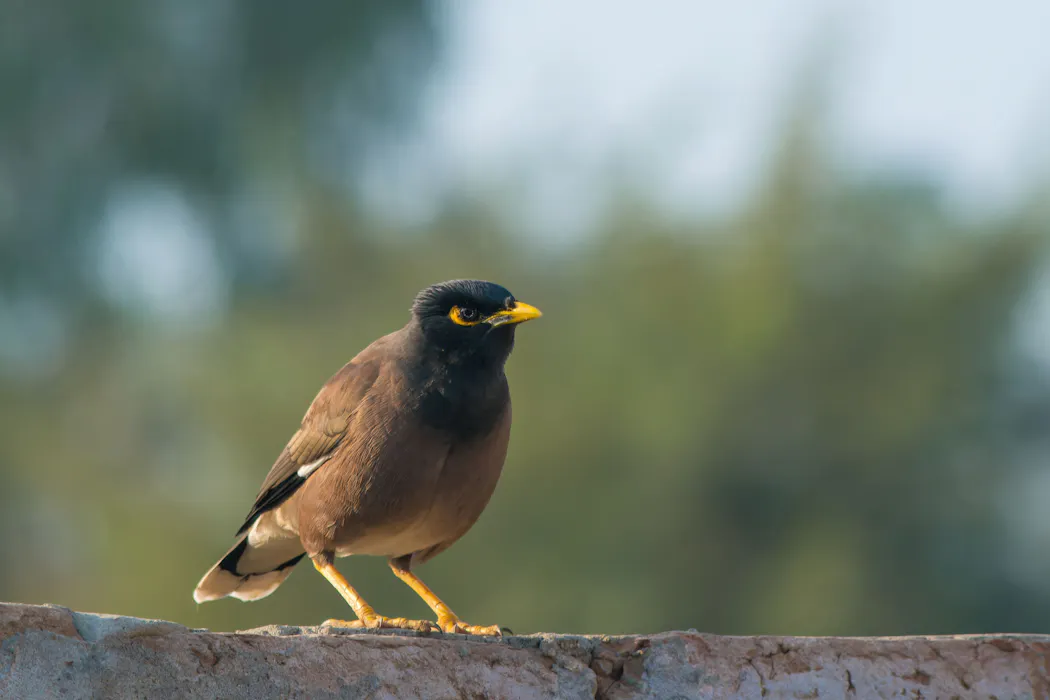
金眼鸟原产于南亚和中亚,自19世纪中期传入澳大利亚后已广泛分布超过160年。1维多利亚州自1862年、昆士兰州自1883年开始有金眼鸟的记录。12000年,这种鸟类被列为国际自然保护联盟编制的全球100种最严重外来物种之一。1
在金眼鸟刚传入澳大利亚的年代,公众对其评价截然不同。1886年悉尼《地球报》的匿名撰稿人将金眼鸟描述为"亲切、温柔、活泼且极其有趣"。11906年,博物学家Charles Barrett在墨尔本将这些鸟称为"极其整洁优雅"。1到1971年,澳大利亚著名观鸟者Alec Chisholm仍在《悉尼晨报》上撰文称其"不具有经济损害"。1
然而,从20世纪70年代开始,民众舆论发生显著转变。1到1980-1990年代,人们对这一"入侵物种"的仇恨不断加深。11988年,《堪培拉时报》甚至用比喻语言将金眼鸟现象与"亚洲"移民恐惧相联系。120世纪90年代后期,同行评审研究开始发表金眼鸟对本地野生动物的影响,特别是与本地鹦鹉在繁殖地上的竞争。1研究表明,人们对金眼鸟态度的改变源于社会心理因素,而非鸟类本身行为的实际变化。1目前,昆士兰州社区正在尝试根除金眼鸟种群,但历史证明此类根除努力往往难以持久奏效。1
The common myna, a bird species native to South and Central Asia, has become one of the world's most problematic invasive species, yet this transformation in public perception occurred over more than a century of coexistence in Australia.1 First documented in Victoria in 1862 and in Queensland in 1883, the myna was initially welcomed by Australian society.1 An anonymous writer in the Sydney Globe newspaper described the bird in 1886 as "affectionate, gentle, lively and exceedingly interesting," while naturalist Charles Barrett praised Melbourne's mynas in 1906 as "extremely neat and graceful."1 By 1971, prominent birdwatcher Alec Chisholm wrote in the Sydney Morning Herald that the species posed "no economic injury."1
However, public sentiment shifted dramatically beginning in the 1970s, with intensified hostility toward the birds as an "invasive species" developing through the 1980s and 1990s.1 Research published in the late 1990s began documenting the myna's competitive impact on native Australian parrots for breeding sites, yet scholars have identified social psychology rather than changes in the birds' actual behavior as the primary driver of this attitude reversal.1 In 1988, the Canberra Times employed metaphorical language linking the myna phenomenon to fears about Asian immigration, reflecting broader social anxieties of the period.1 Today, communities in Queensland are attempting to eradicate myna populations, though historical evidence suggests such efforts rarely achieve lasting success.1 The myna was ranked among the world's 100 most serious invasive species by the International Union for Conservation of Nature in 2000.1
评论
还没有评论,欢迎留下第一条。