研究人员发现蜂巢具有一套复杂的防御机制,通过蜂蜜、蜂胶和花粉等不同物质中的化学成分协同作用,形成了抵抗病原体的"活的免疫系统"。1 这项研究基于对新南威尔士州五个养蜂场共24个蜂群的采样分析,采用DNA测序、微生物抑制能力测试和核磁共振光谱学等技术进行检测。1
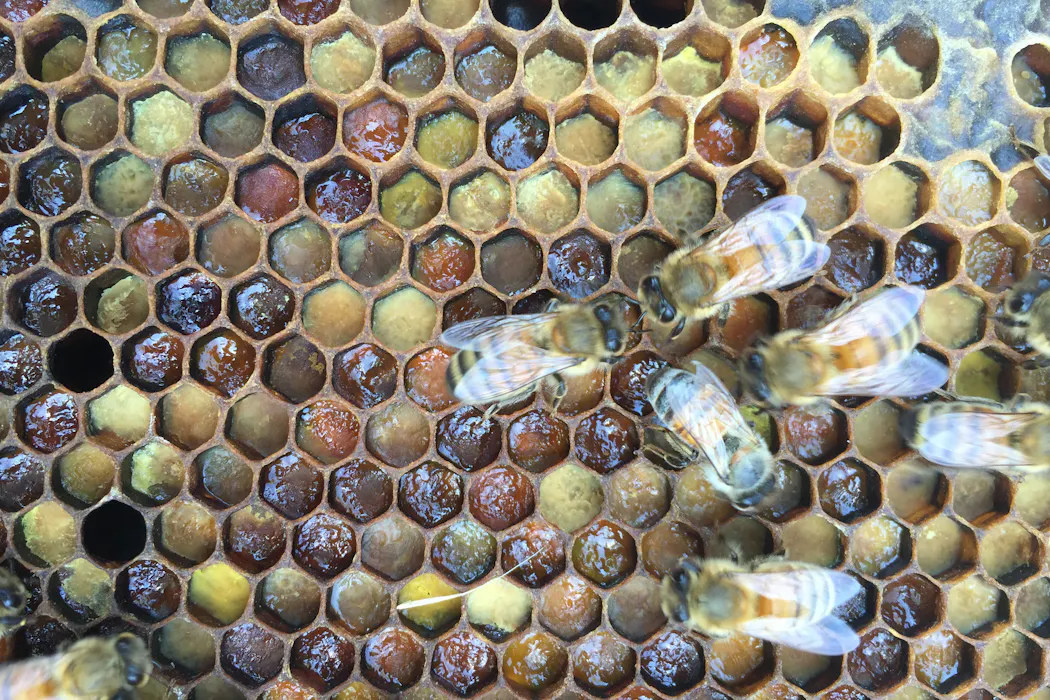
蜂巢内的三种关键物质各自承担不同的防御职责。1 蜂蜜主要依靠过氧化氢进行防御,蜂胶利用黄酮类化合物发挥抗菌作用,而花粉则采用类似发酵食品的机制,含有短链脂肪酸来抵抗有害微生物。1 研究表明,蜂群周围生态景观中的植物多样性直接影响其化学防御的有效性,本地植被丰富度决定了蜂群可用的防御资源。1 影响蜂群防御能力的最强预测因子是养蜂场的具体位置,而非疾病历史或蜂群健康状态。1 这一发现反映了蜜蜂通常只在距离巢穴几公里内觅食的采食习性,决定了其能获取的防御物质来源。1 该研究已发表在《ISME Communications》期刊上。1
Researchers have identified that honey bee hives operate as sophisticated, multi-layered defense mechanisms against pathogens, with different materials deployed strategically throughout the colony to resist infection.1 A study published in ISME Communications analyzed samples from 24 hives across five apiaries in New South Wales, employing DNA sequencing, microbial inhibition assays, and nuclear magnetic resonance spectroscopy to map the chemical defenses distributed across the hive.1
The findings reveal that honey, propolis, and pollen each employ distinct antimicrobial strategies tailored to their specific locations within the colony.1 Honey relies primarily on hydrogen peroxide for its antibacterial properties, while propolis leverages flavonoid compounds to suppress disease-causing organisms.1 Pollen operates through a fermentation-like mechanism, generating short-chain fatty acids that contribute to the colony's protective arsenal.1 The hive's location—specifically the apiary it occupies—emerged as the strongest predictor of chemical defense effectiveness, surpassing factors such as disease history or colony health status.1
The research underscores the critical role of environmental context in bolstering colony immunity. The diversity of plant life in the surrounding landscape directly determines the availability and potency of chemical defenses available to bees, since foraging typically occurs within just a few kilometers of the hive.1 Local vegetation richness fundamentally shapes a colony's capacity to maintain disease resistance.
评论
还没有评论,欢迎留下第一条。