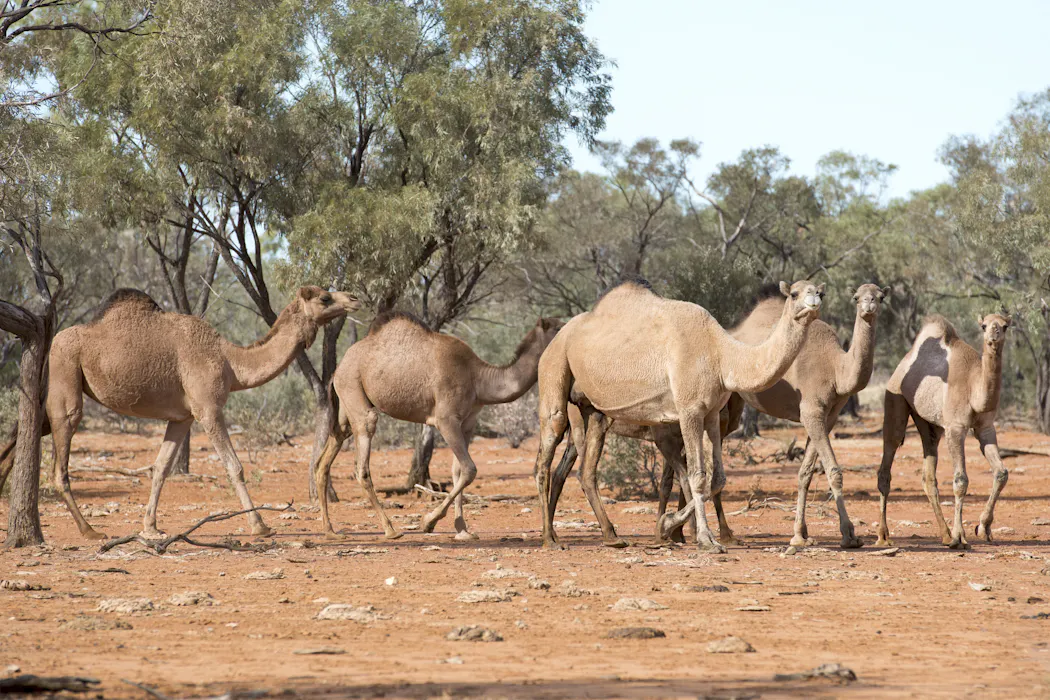
澳大利亚已演变成多个濒危物种的意外庇护地。一驼峰骆驼在其原生的北非和中东地区已约2000年未在野生环境中出现,现被认为在野生中已灭绝,却在澳大利亚建立了种群1。野牛因东南亚的狩猎、栖息地丧失和疾病威胁已成为极危物种,北领地已成为其最重要的据点之一1。1860年代引入澳大利亚的6种鹿中有3种在全球范围内处于危险中1。
这一现象引发了对传统野生动物管理策略的重新思考。研究数据表明,约20%的入侵哺乳动物物种在原生地受到威胁,而50%的入侵大型动物在原生地要么濒危要么已灭绝1。研究表明,欧洲、美国西南部和澳大利亚中部的某些景观可能具有全球保护价值1。这对传统上将所有野生入侵动物视为害兽进行控制的做法提出了质疑,暗示需要重新评估这些物种在保护全球生物多样性中的角色。
Australia has emerged as an unlikely sanctuary for several species facing extinction in their native regions, including one-humped camels, banteng, and hog deer.1 The presence of these feral populations raises complex questions about wildlife management strategies and their potential contribution to global conservation efforts.
One-humped camels have not existed in the wild across North Africa and the Middle East for approximately 2,000 years and are now considered extinct in their native wild habitats.1 Banteng, which have become critically endangered in Southeast Asia due to hunting, habitat loss, and disease, have found a significant stronghold in Australia's Northern Territory.1 Three of six deer species introduced to Australia during the 1860s are now considered endangered globally.1
Research indicates that approximately 20 percent of invasive mammal species face threats in their native ranges, while half of all invasive large animals are either endangered or extinct in their original habitats.1 Some landscapes in Europe, the southwestern United States, and central Australia may possess global conservation significance.1 These findings suggest a need to reconsider traditional approaches to managing invasive wildlife as agricultural or environmental pests, particularly when populations of threatened species depend on their continued survival in these non-native environments.
评论
还没有评论,欢迎留下第一条。