紫薇树因其绚烂花朵在澳大利亚城市街景中颇受欢迎,但同时也因体型较小、遮荫有限、落花易导致路面湿滑等问题引发争议1。植物学家对这一广泛种植的树种进行了深入分析,揭示了其作为街道树木的多面性。
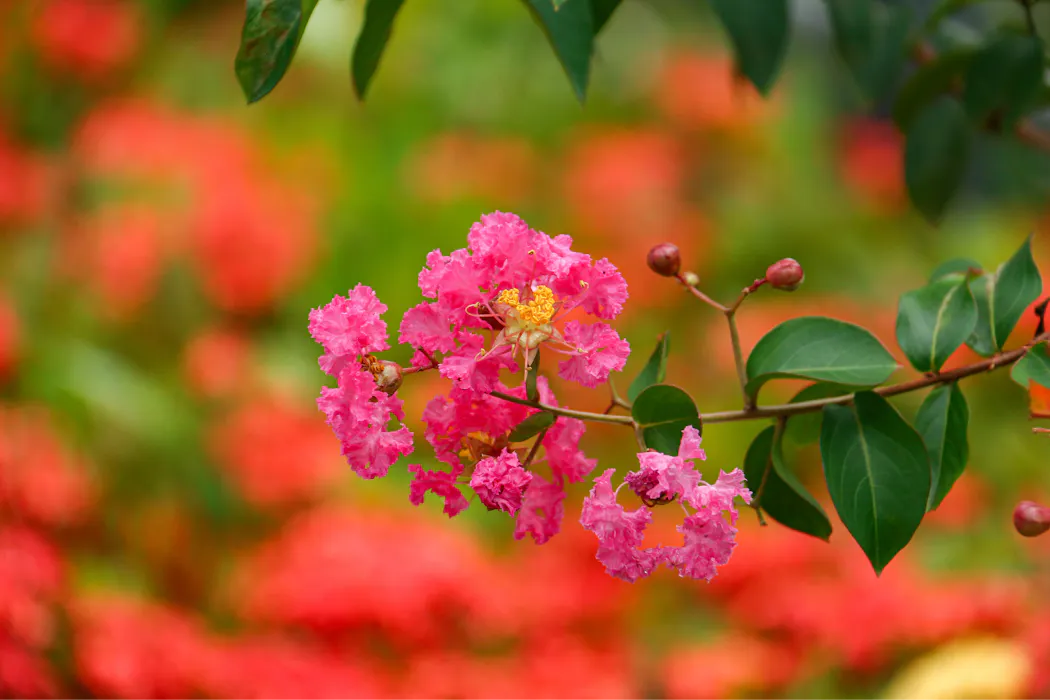
紫薇树属于约50个品种的植物群,其中仅1种原产于澳大利亚北部1。最常见的栽培品种(Lagerstroemia indica)高度约5米,花色包括白、粉、紫、红四种1。此外,通过与日本紫薇杂交培育的新品种结合了两者的优点——保留了色彩丰富性,同时提升了抗病能力1。紫薇树具有较长的生命周期,寿命可达100年,其结构成熟需要5至10年1。
在养护实践中,过度修剪紫薇树被业内俗称为"树木谋杀",在澳大利亚不被推荐1。紫薇树与梨树等其他街道树木一样,其流行度遵循园林设计的时尚周期1。树木的适用性最终取决于具体的种植规模和位置选择。
Crepe myrtles occupy a paradoxical position in Australian cities, celebrated for their vibrant blooms yet criticized for their limitations as street trees.1 Botanist Gregory Moore explores this complicated relationship, noting that approximately 50 species of crepe myrtle exist, with only one native to northern Australia.1 The most commonly planted variety, Lagerstroemia indica, typically reaches about 5 meters in height and produces flowers in white, pink, purple, or red.1
The appeal of crepe myrtles lies in their ornamental qualities, but practical concerns have sparked debate over their suitability for widespread urban planting.1 These trees provide limited shade and their fallen flowers can create slippery surfaces on pavements—issues that have fueled criticism among city planners and residents.1 Hybrid varieties combine the disease resistance of Japanese crepe myrtles with the rich color palette of Lagerstroemia indica, offering an alternative that addresses some horticultural concerns.1
Crepe myrtles can live up to 100 years, with their structure maturing over 5 to 10 years.1 Aggressive pruning of these trees is colloquially referred to as "tree murder" in Australia and is not recommended.1 Like other street trees such as pears, crepe myrtles follow the cyclical trends of landscape design fashion, suggesting that their popularity may shift over time.1 The appropriateness of planting crepe myrtles ultimately depends on the scale of cultivation and specific location within the urban environment.1
评论
还没有评论,欢迎留下第一条。