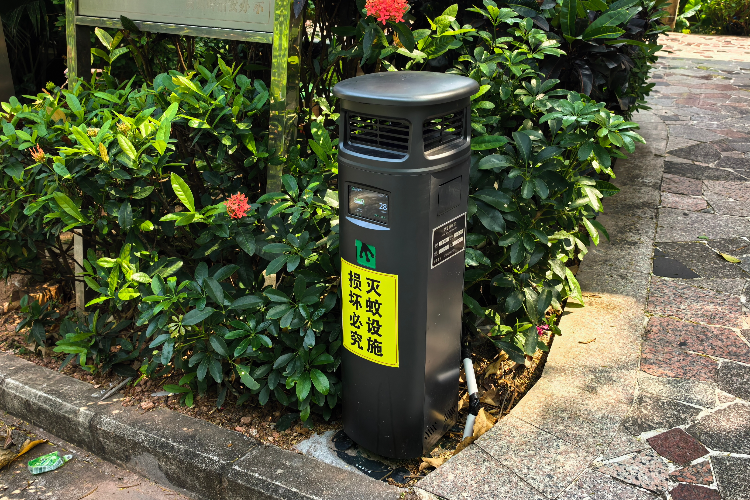
深圳罗湖区黄贝岭山公园已投放4台吞天蛙呼吸式生物捕蚊机,采用物理仿生诱捕技术替代传统化学消杀方式1。该设备通过模拟人体呼吸诱使蚊子靠近,再利用内部气流将蚊子吸入进行物理灭杀1。单台装置可覆盖50至200平方米,设计捕蚊量每日可达500至30000只1。
黄贝岭山公园山林总面积约1.2万平方米,其中道路及休闲活动空间约3000平方米1。这些捕蚊设备采集的数据已接入智慧应急管理指挥中心系统,为社区精准蚊虫治理提供支撑1。现场数据显示,设备在报道当日已捕蚊28只,累计捕蚊1593只1。
为进一步扩大防控参与面,深圳还于6月1日上线蚊虫随手拍平台,邀请市民共同参与蚊虫防控工作1。
Shenzhen's Luohu District has introduced an innovative approach to mosquito control by deploying advanced biological capture technology at Huangbeilingshan Park. 1 Four "Tian-swallowing Frog" respiratory-style biological mosquito-catching machines have been installed in the park, which covers approximately 12,000 square meters, with about 3,000 square meters designated for pathways and recreational areas. 1 Rather than relying on chemical pesticides, the devices employ pure physical biometric capture technology that mimics human respiration to attract mosquitoes, then uses internal airflow to draw them in for physical elimination. 1
Each unit can cover an area between 50 and 200 square meters and is designed to capture between 500 and 30,000 mosquitoes per day. 1 The devices transmit real-time mosquito density data directly to the district's Smart Emergency Management Command Center, enabling precision-based mosquito control strategies at the community level. 1 At the time of reporting, the equipment had captured 28 mosquitoes that day, with a cumulative total of 1,593 specimens since deployment. 1 To further engage residents in pest prevention efforts, Shenzhen launched a "Mosquito Snapshot" platform on June 1, allowing citizens to participate in mosquito surveillance and control initiatives. 1
评论
还没有评论,欢迎留下第一条。