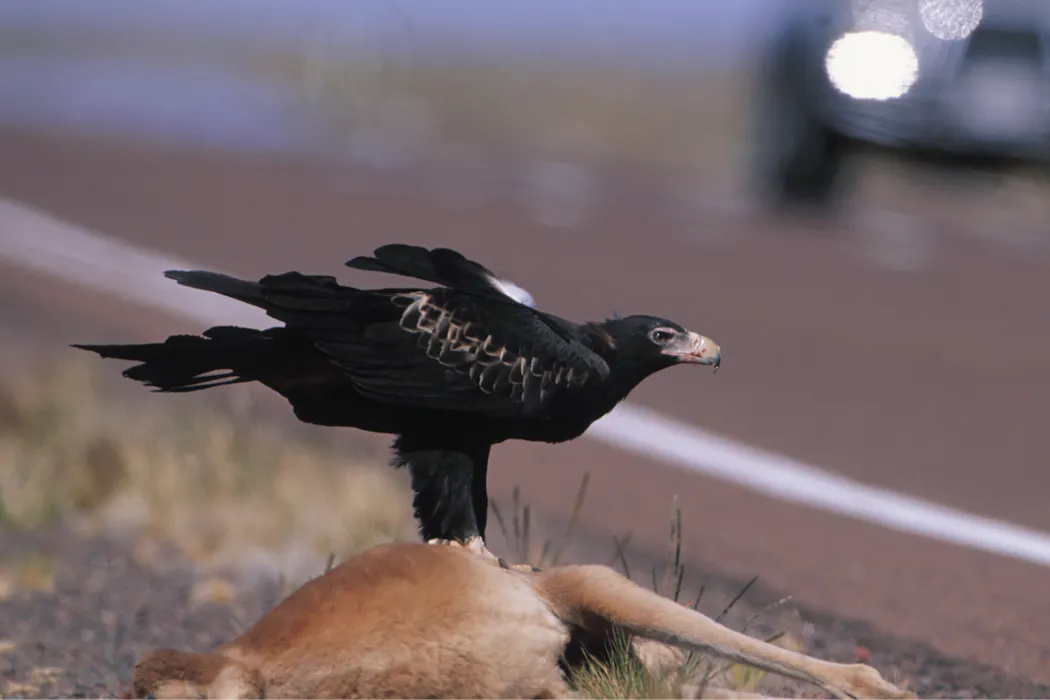
研究人员对澳大利亚新南威尔士州蓝山地区的40具东部灰袋鼠尸体进行监测,发现野生食腐动物采取了出人意料的策略性进食方式。1野狗、楔尾鹰和赤狐并非不加选择地吞噬任何可获得的食物,而是像在自助餐厅选菜一样有针对性地采食富含脂肪的身体部位。1这项研究涵盖了一个夏季和一个冬季的监测周期,揭示了食腐动物复杂的营养选择行为。1
在采食优先级上,不同物种展现出明显的行为差异。1楔尾鹰首先到达时,持续优先选择头部和腹部采食;野狗则最常以尾部为目标;赤狐因竞争处于劣势地位。1所有食腐者都优先采食高脂肪区域,包括尾部基部、内脏周围和脑部,随后随着尸体分解而转向采食肌肉发达的后肢等高蛋白部位。1季节差异也影响了采食模式,冬季相比夏季,野狗和鹰对腹部的采食增加。1
Researchers monitoring carcasses in Australia's Blue Mountains have discovered that wild scavengers do not simply consume whatever is readily available, but instead exhibit deliberate dietary preferences akin to selecting items from a buffet.1 A study tracking 40 eastern gray kangaroo carcasses across one summer and one winter season revealed that the region's primary scavengers—wild dogs, wedge-tailed eagles, and red foxes—prioritize high-fat body parts over other accessible tissues.1
The findings show that top scavengers follow distinct feeding patterns based on both species and carcass decomposition stage.1 Eagles tend to target the head and abdominal regions when they arrive first, while wild dogs most frequently focus on the tail base, a fat-rich area.1 Red foxes, occupying a lower position in the scavenging hierarchy, face competitive disadvantages in accessing preferred sites.1 As carcasses decompose, scavengers shift their feeding preferences, initially concentrating on high-fat zones including the tail base, organs, and brain, before transitioning to protein-rich muscle tissue in the hindquarters.1 Seasonal variation also influences feeding behavior, with wild dogs and eagles consuming more abdominal tissue during winter compared to summer.1
评论
还没有评论,欢迎留下第一条。