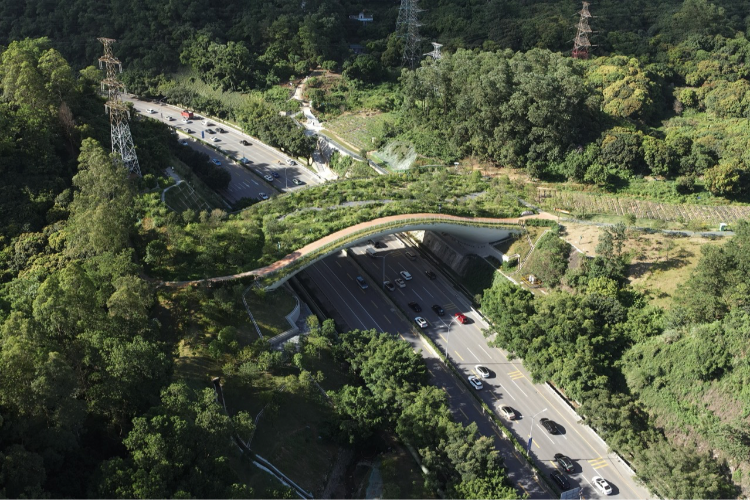
深圳在梅观高速之上建设的鲲鹏径一号生态廊桥已于2023年12月31日完工贯通1。这座全长76.8米、桥面最宽处48.4米的廊桥1,超过90%的空间完全交付给野生动物使用,仅约4米宽的区域供人行步道1。桥面覆土种植了80多种深圳乡土植物1,为穿越其上的动物提供生态环境。
该项目成功连接了被梅观高速割裂28年的梅林山和银湖山1。自完工后,红外监测相机在23天内捕捉到豹猫穿越廊桥1,此后陆续记录了豹猫、野猪等十余种野生动物的通行活动,截至2026年6月累计约400次1。
这项工程的构想源于2018年翠园中学三名初中生张楚楚、李欣蔚、胡凯文的课题提案《关于在深圳建设生物通道的设想》1,从少年的创意到城市生态实践的转化,见证了深圳在城市核心为野生动物让出生存天地的承诺。
Shenzhen has constructed an ecological corridor bridge named Kunpeng Trail No. 1 above the Meiguan Expressway to restore connectivity between wildlife habitats separated for 28 years.1 The project originated from a 2018 research proposal by three junior high school students from Cuiyuan Middle School—Zhang Chuchu, Li Xinwei, and Hu Kaiwen—titled "Concept for Building Biological Corridors in Shenzhen."1
The bridge spans 76.8 meters in total length, with its widest section measuring 48.4 meters.1 More than 90 percent of the bridge's surface area has been dedicated entirely to wildlife, with only approximately 4 meters of width reserved for a human pedestrian pathway.1 The structure's surface is covered with soil planted with over 80 species of native Shenzhen vegetation.1 The Meiguan Expressway, completed in the 1990s, had divided Meilin Mountain and Yinhu Mountain for 28 years before this project reconnected them.1
The corridor bridge was completed and opened on December 31, 2023.1 Within 23 days of opening, infrared monitoring cameras captured a leopard cat crossing the bridge.1 By June 2026, the project had recorded approximately 400 wildlife passages, documenting over a dozen species including leopard cats and wild boars traversing the ecological corridor.1
评论
还没有评论,欢迎留下第一条。