研究人员首次通过视频技术记录了蜜蜂螫针内部毒液泵的工作原理1。研究发现,蜜蜂螫针内存在两个相向运动的可折叠活塞阀门,通过相反方向的泵吸实现连续毒液流动1。这些活塞的运动方式类似于汽车活塞,但具有高度可变形的特性1。
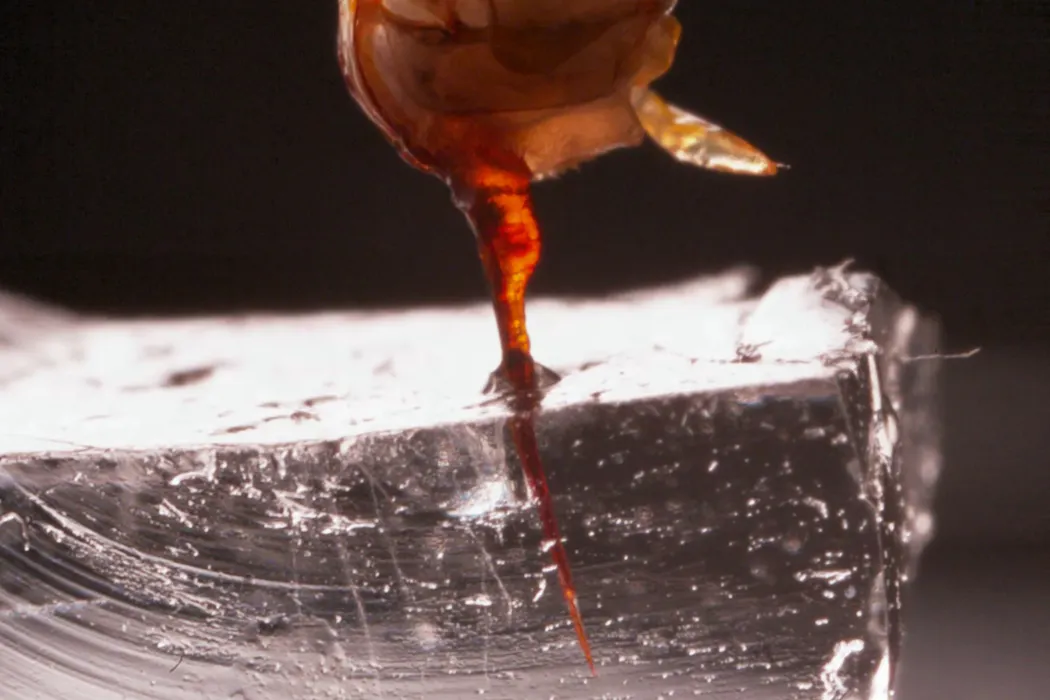
研究团队采用模拟人类皮肤的透明凝胶进行实验,成功观察到螫针脱离蜂体后仍能自主泵送毒液,其工作时间可超过一分钟1。为了深入验证泵吸原理,研究人员通过三维扫描技术获取螫针的详细结构,随后进行建模并利用三维打印技术制造出原型进行验证1。
这种独特的生物泵设计具有潜在的应用价值,可能为微流体技术、药物输送系统和连续流泵等领域的开发提供启发1。
Scientists have documented for the first time how venom is actively pumped through a honeybee's stinger using video recording technology.1 The research team, led by Fiorella Ramirez Esquivel, discovered that the stinger contains two opposing piston-like valves that work in opposite directions to create continuous venom flow.1 Remarkably, a detached stinger can continue pumping venom for more than one minute after separating from the bee's body.1
To observe this mechanism in action, researchers used a transparent gel designed to mimic human skin and advanced video imaging to capture the internal workings of the stinger.1 The team then employed three-dimensional scanning and modeling techniques, followed by three-dimensional printing to fabricate prototypes that validated their understanding of the pumping principle.1 The two collapsible pistons operate similarly to automotive pistons but possess variable deformability, enabling them to function as an efficient dual-direction pump.1
This distinctive biological pumping design holds potential applications beyond entomology, with researchers identifying possibilities in microfluidics, drug delivery systems, and continuous-flow pumps.1
评论
还没有评论,欢迎留下第一条。