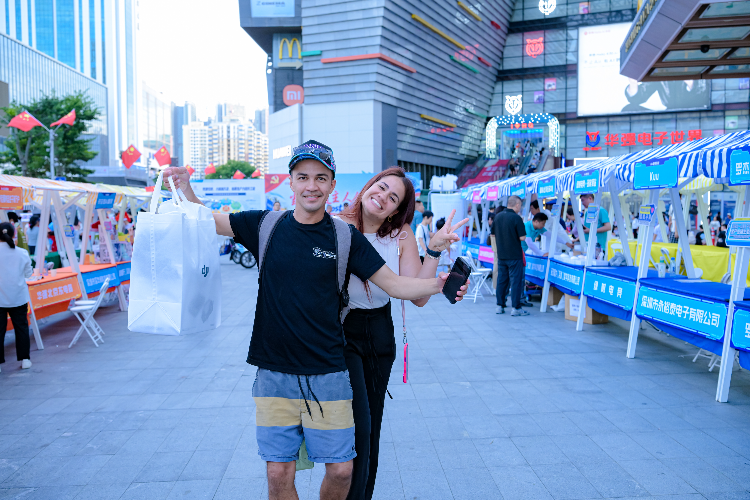
外国游客正在用行动诠释中国创新的吸引力。他们带着空行李箱来到深圳华强北,购买AI眼镜、无人机、机器人等科技产品后满载而归,并在社交媒体上分享这些中国创新产品1。
今年1至7月,华强北AI产品全品类销售额同比增长55%以上,其中AI眼镜销量翻倍1。同期无人机和机器人销量同比增长60%至70%1。部分华强北门店的外国消费者贡献了约四成的销售额1。一家大疆门店负责人表示,外国顾客约占该店客流的一半1。
华强北之所以能吸引全球消费者,得益于其独特的产业集聚优势。仅1.45平方公里的区域内集聚了约11.5万家商事主体和35家专业市场1。这种高度集中的生态系统使得"楼上选购商品,楼下直接发货"成为可能1。2024年8月20日,新华社将"上午设计、下午打样、次日量产、一周出海"命名为"深圳周期"1,体现了华强北从中国制造向中国创造的转变。
Foreign visitors are arriving in China with empty luggage and departing with suitcases packed full of cutting-edge technology.1 In Shenzhen's Huaqiangbei district, these travelers purchase AI glasses, drones, robots, and smart watches before sharing their finds on social media.1
Huaqiangbei has become a showcase for Chinese technological innovation, driven by its exceptionally dense industrial ecosystem.1 The district, which spans just 1.45 square kilometers, hosts approximately 11.5 thousand commercial entities and 35 specialized markets.1 This concentration enables a distinctive operational model: customers can select products upstairs and have goods shipped from the floor below.1 The region has achieved what was officially designated by Xinhua News Agency in August 2024 as the "Shenzhen cycle"—a production timeline of design in the morning, prototyping in the afternoon, mass production the next day, and market entry within a week.1
The commercial impact is substantial. From January through July this year, Huaqiangbei recorded a more than 55 percent year-over-year sales increase across all AI product categories, with AI glasses sales doubling.1 Drone and robot sales grew between 60 and 70 percent during the same period.1 Foreign consumers represent a significant portion of this activity: at one major DJI store, international customers account for approximately half of foot traffic.1 At certain Huaqiangbei retail locations, foreign consumers contribute roughly 40 percent of total sales revenue.1
评论
还没有评论,欢迎留下第一条。