研究表明,澳大利亚东南部森林目前积累的易燃物质源于殖民统治的影响,而非人为气候变化。1通过分析古建库尼冈国家公园普加古拉湖1000年的沉积物记录,科研人员发现这一转变的时间脉络:在古纳库尔奈原住民的传统护理下,超过800年间通过低温文化燃烧维持了开放林地景观,即使在极端火灾季节也未发生灾难性火灾。1但自1830至1860年代殖民统治中断了原住民对土地的照顾后,景观急剧转变为易燃森林,这一转变比人为气候变化开始早了约一个世纪。1
殖民化对火灾格局的影响深远。1随着原住民火地管理的停止,高温野火成为主导,灌木丛增厚,桉树覆盖面积增长至殖民前水平的近四倍。1这直接改变了火灾间隔——从1800年代晚期的约40年缩短到最近10年的仅约5年。1古建库尼冈国家公园在2019至2020年黑色夏季火灾中90%的面积被烧毁,正是这种转变的极端后果。1研究指出,东南澳大利亚约80%的森林属于能从定期低温文化燃烧中受益的再生桉树林。1
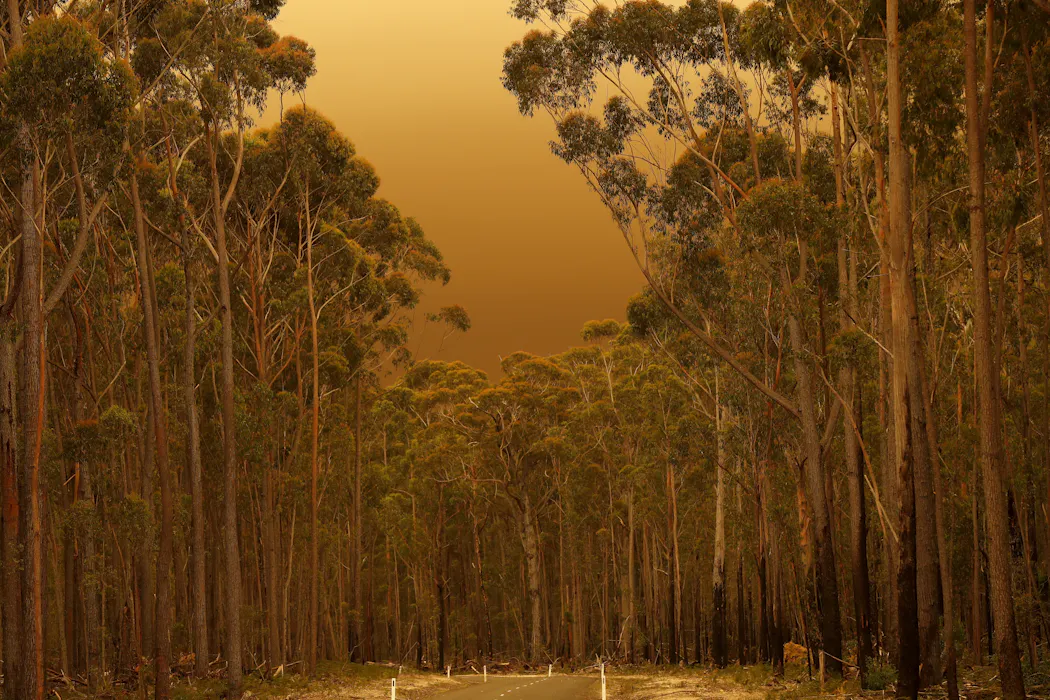
Research examining sediment deposits from a deep lake in Goongeulum National Park reveals that the high fuel loads now threatening Australia's southeastern forests are not a natural phenomenon but rather a consequence of colonisation.1 Analysis of 1,000 years of sediment from Puga Gula Lake demonstrates that for over 800 years, Indigenous Gunaikurnai land management practices involving low-intensity cultural burning maintained stable, open woodlands without catastrophic fire events, even during extreme fire seasons.1 This landscape management system collapsed following colonisation between 1830 and 1860, when European settlement interrupted Gunaikurnai fire stewardship, fundamentally altering the region's fire regime well before anthropogenic climate change began its influence.1
The transformation of the landscape into a fire-prone forest occurred rapidly after colonisation ceased traditional burning practices.1 High-intensity fires became dominant, shrub density increased, and eucalyptus coverage expanded to nearly four times pre-colonisation levels.1 The consequences are evident in contemporary fire patterns: intervals between fires contracted dramatically from approximately 40 years in the late 1800s to roughly 5 years in recent times.1 During the 2019-20 Black Summer fires, approximately 90 percent of Goongeulum National Park burned.1 Significantly, approximately 80 percent of southeastern Australian forests consist of eucalyptus regrowth that would benefit from regular low-intensity cultural burning, suggesting that restoring Indigenous land management practices could mitigate current fire risk.1
评论
还没有评论,欢迎留下第一条。