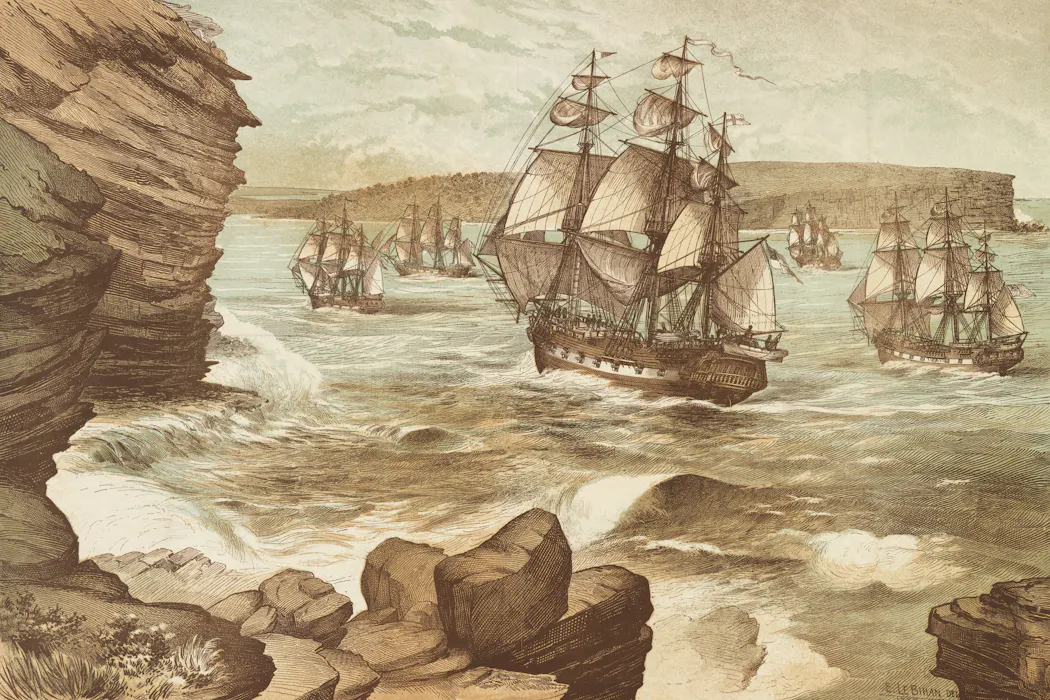
1788年1月18日,菲利普总督率第一舰队登陆新南威尔士时,英国政府并未提供任何货币供应1。面对这一困境,菲利普被授权向英国财政部发行债务凭证,以采购建设所需的物资1。他随后向第一舰队水手签发欠条凭证(IOU),用于支付建造住所的费用1。这些凭证之所以被接受,主要源于菲利普作为政府代理人的可信度1。
英国直到1792年11月18日才首次向殖民地供应货币,距离菲利普登陆已过去1,766天1。首批供应仅为1,001英镑的白银硬币1。在此之前的数年间,新南威尔士殖民地形成了一套非正式的货币体系,包括菲利普的IOU、私人本票和商店凭证等多种形式的信用工具1。这一临时性安排一直延续到1820年代,才最终建立起稳定的货币供应体系,总督也随之停止发行欠条凭证1。
When Governor Phillip and the First Fleet arrived in New South Wales on January 18, 1788, the British government had failed to supply the colony with any currency 1. Faced with the immediate need to finance construction and pay settlers, Phillip devised an unconventional solution: he issued promissory notes, or IOUs, to workers and creditors 1. These informal debt instruments gained acceptance largely because Phillip commanded trust as an authorized government representative 1. The governor was specifically authorized to issue debt certificates to the British Treasury in order to purchase supplies and cover colonial expenses 1.
The makeshift monetary system that emerged from Phillip's necessity proved remarkably resilient. In addition to the governor's IOUs, private promissory notes and merchant vouchers circulated among the colonists, creating an ad hoc financial network 1. This informal arrangement persisted for over four years until the British government finally dispatched currency to the colony. On November 18, 1792—1,766 days after Phillip's landing—the first official monetary shipment arrived, consisting of £1,001 in silver coin 1. However, even this initial supply proved insufficient to fully monetize the colonial economy. A stable and adequate currency supply would not be established until the 1820s, when the governor eventually ceased issuing IOUs and the colony's financial system became more formalized 1. Phillip's expenditures during the early settlement period were only retrospectively approved by the British Parliament, in accordance with legislation passed in 1787 requiring parliamentary authorization of government spending 1.
评论
还没有评论,欢迎留下第一条。