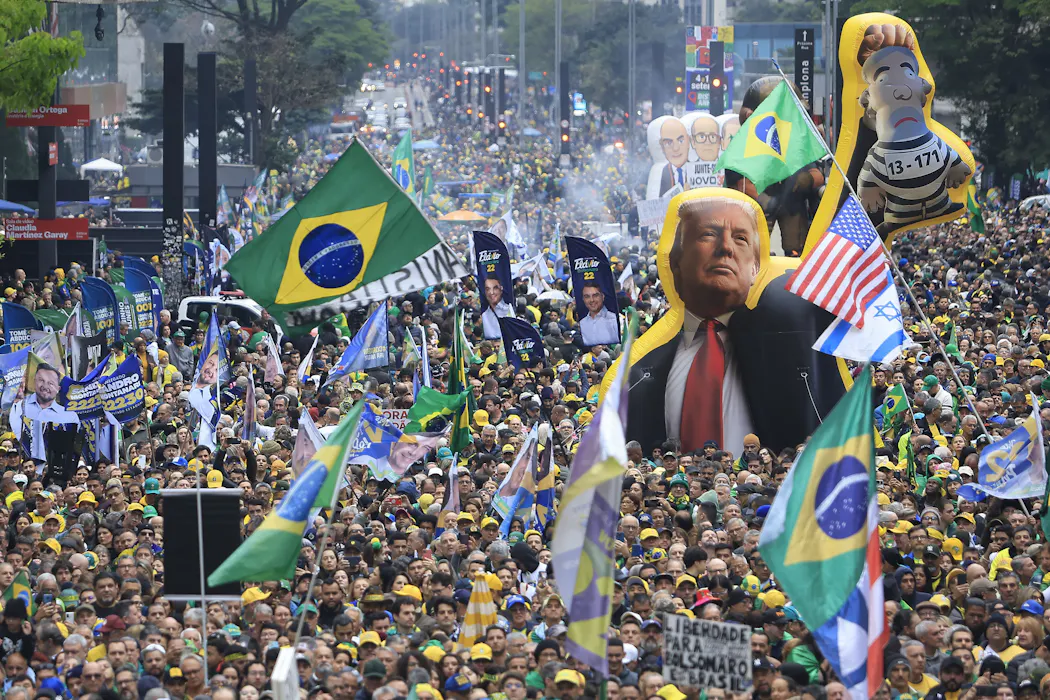
巴西将于本周日举行2026年大选首轮投票,现任总统卢拉面临来自参议员弗拉维奥·博尔索纳罗的挑战1。此次选举进行之际,美国政府和科技平台对巴西的影响引发了对拉美民主韧性的担忧。
特朗普政府采取了一系列经济施压措施。2025年7月,特朗普宣布对巴西商品征收50%关税1。虽然美国最高法院在2月裁定这一关税违法,但政府随后保留了其他关税措施并引入10%的全球附加费1,7月又对巴西部分进口商品征收新的25%关税1。此外,美国财政部在2025年7月根据《全球马格尼茨基法案》对法官亚历山德里·德莫拉埃斯实施制裁1。
在信息层面,美国科技公司的审查行为也成为焦点。Ekō在9月16日报告称Meta批准了13个包含选举虚假信息的测试广告中的大部分1。国际特赦组织的独立测试发现Meta也批准了8个含有虚假信息的模拟巴西选举广告1。上周,Meta被指控限制卢拉竞选活动的广告账户,称其违反了平台规则但未具体说明1。
卢拉在联合国讲话中明确表态:"巴西不属于任何人的后院"1。
Brazil will hold the first round of its 2026 presidential election on Sunday, with incumbent President Luiz Inácio Lula da Silva facing a challenge from Senator Flávio Bolsonaro, son of former President Jair Bolsonaro.1 The election takes place amid mounting pressure from the Trump administration, which has deployed multiple tools to influence Brazil's political outcome, ranging from trade measures to financial sanctions targeting key judicial figures.
The Trump administration has pursued an aggressive tariff strategy against Brazilian goods since mid-2025.1 In July, Trump announced a 50% tariff on Brazilian products, though this measure was ruled unlawful by the US Supreme Court in February, which nonetheless preserved other existing tariffs and introduced a 10% global surcharge.1 That same July, the Trump administration imposed an additional 25% tariff on select Brazilian imports.1 Beyond trade, the US Treasury Department in July 2025 sanctioned Judge Alexandre de Moraes under the Global Magnitsky Act, citing concerns over his conduct in the Brazilian legal system.1
American technology platforms have also drawn scrutiny for their role in the election environment. Research by Ekō published on September 16 found that Meta approved most of 13 test advertisements containing electoral misinformation, while Amnesty International's testing discovered that Meta approved 8 simulated Brazilian election ads containing false information.1 Recently, Meta faced accusations of restricting advertising accounts used by Lula's campaign, claiming violations of platform rules without providing specific justification.1
These developments underscore growing concerns about external interference in Latin American democracy. Lula underscored Brazil's independence during remarks at the United Nations, stating that "Brazil belongs to no one's backyard."1 Meanwhile, former President Bolsonaro was convicted in September 2025 and sentenced to 27 years and 3 months in prison, a development that shapes the political dynamics surrounding Sunday's election.1
评论
还没有评论,欢迎留下第一条。