澳大利亚2025–26年联邦预算数据显示,税收收入占经济的24.1%,高于同年5月预算预测的23.6%1。这一数字引发保守派呼吁减税,但税收问题的答案本质上取决于人们如何看待政府应当承担的职能1。
从历史角度看,澳大利亚的税负水平并非处于高位。1901年联邦成立时,税收仅占国内生产总值的5%1,而2004–05和2005–06年间税收占比已经达到24.2%1。值得注意的是,1950年代初期澳大利亚的最高所得税率曾高达75%1,且在1950–60年代间,经济增长速度比本世纪更快,失业率也更低1。
当前推高政府支出和债务的因素包括人口结构变化和融资成本上升。代际报告显示,由于人口老龄化,老龄护理和卫生支出不断上升1。此外,政府债务利息支出也在增加,这是因为疫情期间发行的低利率债券需要在高利率环境下进行再融资1。
Australia's 2025–26 federal budget has reignited debate over tax burdens, with tax revenue now projected to reach 24.1% of economic output, exceeding the May budget forecast of 23.6% 1. This figure has prompted conservative calls for tax reductions, yet whether Australians are genuinely overtaxed ultimately hinges on philosophical views about government responsibilities and spending priorities 1.
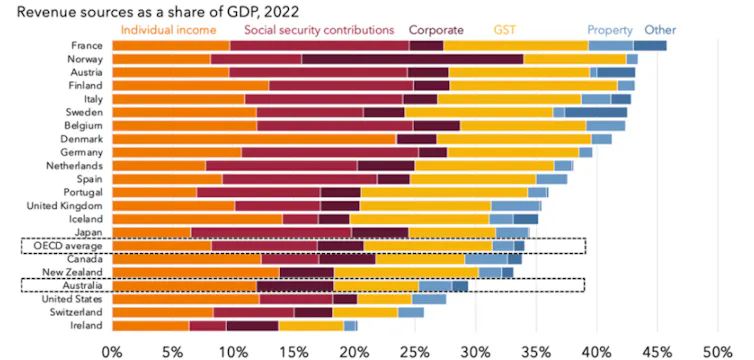
From a historical perspective, Australia's current tax-to-GDP ratio reflects significant change since federation in 1901, when tax revenue accounted for just 5% of GDP 1. More recently, tax revenue represented 24.2% of the economy in both 2004–05 and 2005–06 1. When compared with other developed nations, Australia remains a relatively low-tax country by Organisation for Economic Co-operation and Development standards 1. The 1950s offer an instructive comparison: the top income tax rate then reached 75%, yet the economy expanded faster during the 1950s and 1960s than it has in the current century, while unemployment rates were lower during that earlier period 1.
Current fiscal pressures stem from structural factors beyond policy choices alone. An intergenerational report indicates that ageing care and health expenditures are climbing due to population ageing 1. Additionally, rising interest payments on government debt reflect the need to refinance bonds issued at low rates during the COVID-19 pandemic as those securities mature in a higher-rate environment 1. Whether such spending levels justify current tax rates remains fundamentally a question of how Australians believe government resources should be allocated 1.
评论
还没有评论,欢迎留下第一条。