澳大利亚和新西兰科学家呼吁对南极威尔克斯冰下盆地进行深入科学研究1。该盆地是地球上最少被观测的地区之一,面积约1,400公里×400公里1,最近的陆地永久科研站距离该盆地250公里1,尚无船舶到达库克冰川150公里范围内1。
这一地区的冰川融化关系重大。如果威尔克斯冰下盆地全部冰川融化,将导致全球海平面上升3-4米,并可能破坏海洋环流和气候系统1。研究表明,当全球气温比工业前时期升高2-3°C时,该冰川会大幅萎缩1。这一温度水平曾在上新世时期(300万年前)出现,当时海平面比现在高6-23米1。冰下基岩最深处距海面2,000米,东南极海水温度约-1.8°C1。
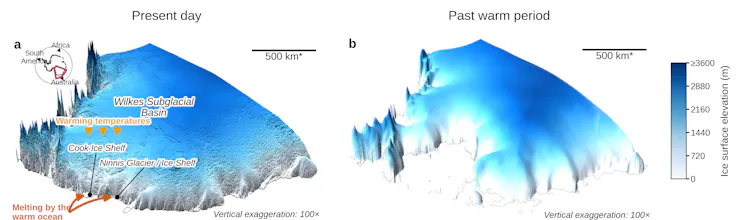
Australian and New Zealand scientists are urging comprehensive research into the Wilkes Subglacial Basin in East Antarctica, one of Earth's least-observed regions.1 The basin, which spans approximately 1,400 kilometers by 400 kilometers, poses a significant threat to global sea levels if its ice were to melt completely, potentially raising ocean levels by 3-4 meters.1 The bedrock beneath the ice descends to depths of 2,000 meters below sea level in places, creating a particularly vulnerable configuration.1
Current evidence suggests that the glacier would experience substantial shrinkage if global temperatures rise by 2-3 degrees Celsius above pre-industrial levels—a threshold humans may reach by the end of this century.1 During the Pliocene epoch 3 million years ago, when temperatures were similarly elevated, sea levels stood 6-23 meters higher than today.1 However, the precise rate and timeline of ice loss in the basin remain uncertain.1
The extreme remoteness of the area has hindered investigation; the nearest permanent land research station lies 250 kilometers away, and no vessel has ventured within 150 kilometers of the Cook Ice Shelf.1 Water temperatures in the surrounding region measure approximately -1.8 degrees Celsius.1 The first known ice shelf collapse in East Antarctica occurred in the 1970s or 1980s.1
评论
还没有评论,欢迎留下第一条。