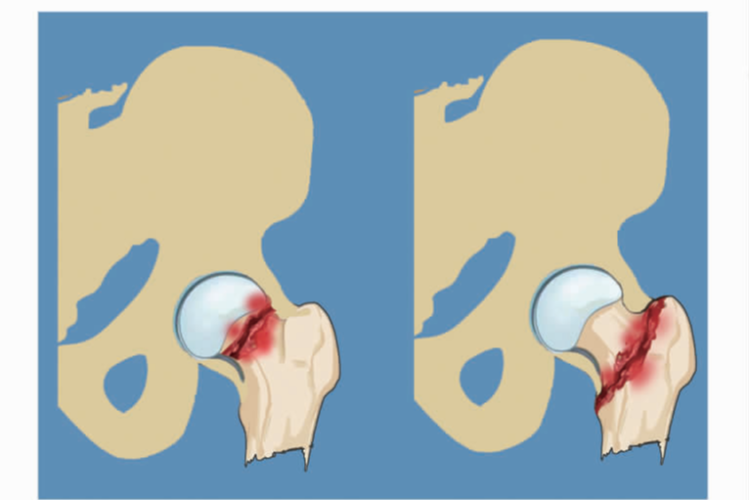
深圳平乐骨伤科医院专家魏秋实就股骨头坏死的防治进行科普。该病的公认致病诱因主要有三类:髋部创伤(其中股骨颈骨折最为常见)、长期过量饮酒和长期大剂量使用糖皮质激素1。30-50岁的中青年群体发病率最高1。
在诊断方面,有高危因素的人群应优先选择磁共振(MRI)检查进行早期筛查1。魏秋实强调,临床治疗采用分层施治方案,并非所有患者都需要进行关节置换1。无塌陷风险的患者可采用非手术保髋方案;存在塌陷风险者则选择微创髓芯减压打压植骨或开放类保髋手术;而严重塌陷患者才进行人工全髋关节置换1。早期诊断和规范治疗可显著提高患者生活质量1。
在康复方面,魏秋实指出长期卧床反而会导致肌肉萎缩、骨质疏松,不利于髋关节功能恢复1。他建议重点强化大腿外侧臀中肌的力量训练,以维持髋关节稳定1。
Wei Qiushi, a specialist at Shenzhen Pingle Orthopedic Hospital, has provided comprehensive guidance on femoral head necrosis, addressing its causes, high-risk populations, and prevention strategies. 1
The condition arises from three primary causes: hip trauma—particularly femoral neck fractures—prolonged excessive alcohol consumption, and long-term high-dose corticosteroid use. 1 The disease predominantly affects individuals aged 30 to 50 years, representing the peak incidence group. 1 For populations with identified risk factors, magnetic resonance imaging (MRI) screening is recommended as the preferred early diagnostic approach. 1
Treatment follows a stratified protocol tailored to disease severity. 1 Patients without collapse risk undergo conservative hip-preserving interventions, while those facing potential collapse receive either minimally invasive core decompression with bone grafting or open hip-preserving procedures. 1 In cases of severe collapse, total hip arthroplasty becomes necessary. 1 Notably, extended bed rest is counterproductive, as it leads to muscle atrophy and osteoporosis, ultimately hindering hip joint function recovery. 1 Wei emphasizes the importance of targeted strength training for the gluteus medius muscle on the outer thigh to maintain hip joint stability. 1 Early diagnosis combined with standardized treatment can substantially improve quality of life for affected patients. 1
评论
还没有评论,欢迎留下第一条。