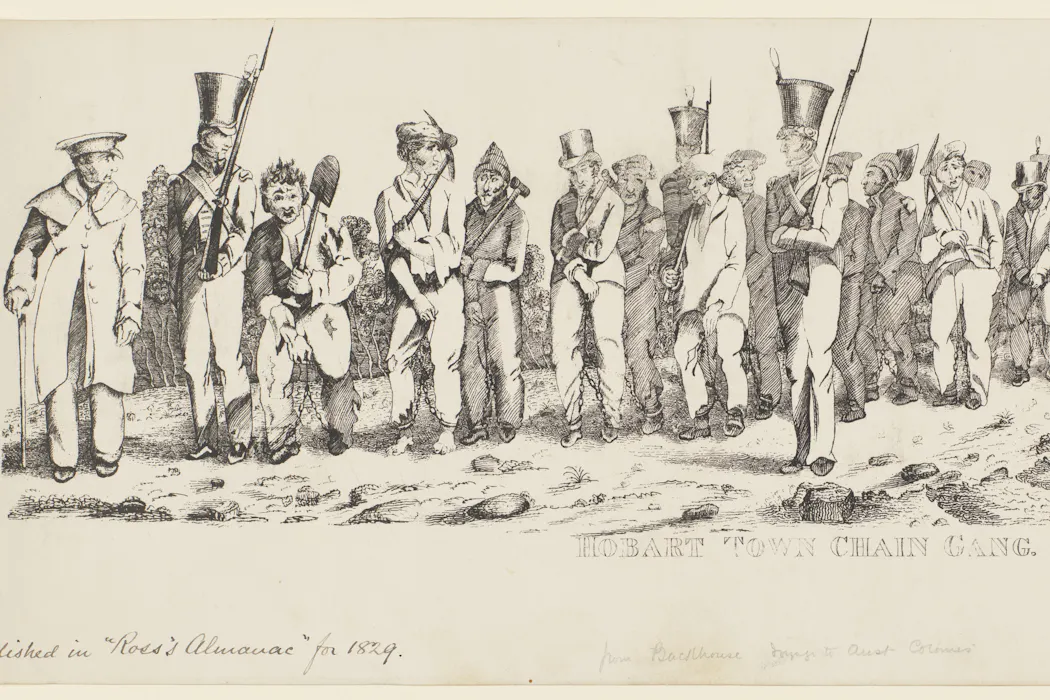
1788年至1868年间,约162,000名男性、女性和儿童从英帝国各地被运送到澳大利亚殖民地1。在很长一段时间里,澳大利亚人对这段历史感到羞愧。1856年,南澳大利亚报纸评价流放罪犯制度"留下污迹"1,而1853年范迪门地改名为塔斯马尼亚,正是因为"范迪门地在各国都与奴役和内疚的概念相关联"1。
从20世纪初开始,澳大利亚人开始重新审视这段过去。1923年,有人称爱尔兰天主教流放犯的后代不应感到羞耻1,到了1926年,墨尔本评论员更是声称"对这些祖先应该感到骄傲和尊敬"1。随着时间推移,流放犯逐渐被重新塑造为建立国家基础的劳动力。2010年,关键流放犯遗址被列入联合国教科文组织世界遗产名录1,标志着这段历史获得了国际认可。
互联网和DNA检测的发展进一步推动了这一转变。2016年,塔斯马尼亚大学开设的在线家族史文凭课程"流放犯祖先"招收了超过1,000名学生1,反映出越来越多的澳大利亚人渴望了解和拥抱自己的流放犯祖先身份。
Between 1788 and 1868, approximately 162,000 men, women, and children from across the British Empire were transported to Australian colonies as convicts 1. For much of the nineteenth century, this ancestry was viewed with shame by many Australians. A South Australian newspaper in 1856 characterized the convict transportation system as leaving "a stain," while the colonial territory of Van Diemen's Land was renamed Tasmania in 1853 specifically because "Van Diemen's Land had become associated with concepts of slavery and guilt throughout the world" 1.
The perception of convict ancestry underwent a profound transformation over the following decades. By 1926, a Melbourne commentator asserted that these ancestors "should be a source of pride and respect" 1. This shift accelerated dramatically in the late twentieth and early twenty-first centuries. In 2010, key convict heritage sites were inscribed on the UNESCO World Heritage List, elevating their historical significance 1. The expansion of internet genealogy and DNA testing further popularized exploration of convict family connections. By 2016, the University of Tasmania's online family history diploma program titled "Convict Ancestors" enrolled more than 1,000 students 1, reflecting widespread public interest in discovering and acknowledging this aspect of Australian heritage. Modern Australians have increasingly come to view convict forebears not as sources of disgrace, but as foundational laborers who helped establish the nation.
评论
还没有评论,欢迎留下第一条。