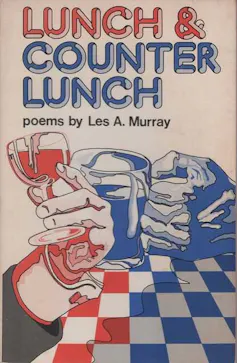
澳大利亚诗人莱斯·默里(1938–2019)的代表作《宽豆布道》展现了其独特的创作风格,将日常事物与深刻的精神思考相融合1。这首诗收录于默里1974年出版的第四部诗集《午餐与柜台午餐》中,通过对宽豆这一普通农作物的细致描写,融入宗教意象与日常语言,实现了高雅与通俗、物质与精神的结合1。
诗歌采用九个三行诗节的结构,形成三位一体的对称布局,体现了默里对形式的精妙把握1。评论家约翰·金塞拉在其著作《超越歧义》中指出,这首诗具有"压倒性的乐观主义"1。通过丰富的意象和创新的语言运用,默里将平凡的豆荚转化为对多样性、充盈与幸福的赞颂,使这首作品成为取之不尽的沉思之粮1。
Australian poet Les Murray created one of his most enduring works in "The Broad Bean Sermon," a composition that transforms an ordinary agricultural subject into a meditation on diversity, abundance, and human flourishing 1. The poem appears in Murray's 1974 collection Lunch and Counter Lunch, his fourth major poetry volume, and exemplifies his characteristic approach of interweaving religious imagery with vernacular language to bridge the gap between high and popular expression 1.
The work comprises nine tercets—three-line stanzas arranged in a structure evoking the Christian trinity—a formal choice that reinforces its thematic concerns 1. Murray, who converted to Roman Catholicism in 1962, infuses the seemingly simple subject of broad bean pods with spiritual resonance and linguistic innovation 1. Literary critic John Kinsella has noted the poem's "overwhelming optimism," capturing how Murray elevates the mundane to reveal deeper truths about existence 1. Murray himself explored such artistic concerns in his 1988 essay "The Trade in Images," reflecting on how poets transform everyday objects into vehicles for profound meaning 1. Born in 1938 and passing away in 2019, Murray left a legacy encompassing works such as Subhuman Redneck Poems (1996), establishing himself as a major figure in Australian literature through his distinctive fusion of the material and spiritual realms 1.
评论
还没有评论,欢迎留下第一条。