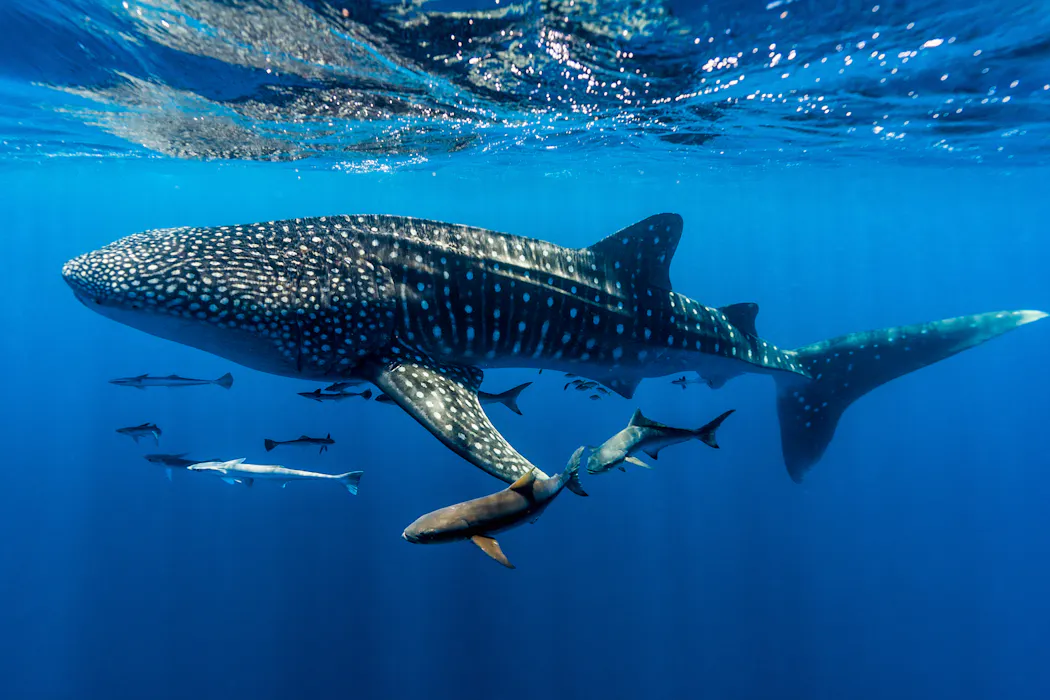
澳大利亚研究团队对30年的鲨鱼和射线迁徙研究数据进行了分析,发现29种鲨鱼和射线物种已知会跨越国境迁徙1。然而,仅有5种物种——白鲨、鲸鲨、短鳍鬼鲨、蓝鲨和学校鲨——拥有澳大利亚与其他国家间迁徙活动的研究记录1。这一现状凸显了跨境海洋生物保护面临的重大信息缺口。
鲨鱼的长距离迁徙能力令人瞩目。白鲨从南非游至西澳大利亚后返回,往返距离达到约11,000公里,而学校鲨可在塔斯曼海游至新西兰,距离达3,000公里1。令人担忧的是,受威胁物种中近三分之二缺乏已发表的迁徙模式研究,另有18种物种的迁徙信息完全缺失1。
研究建议澳大利亚与印度尼西亚、东巴布亚新几内亚等邻国加强合作,同时开展针对性研究和战略性追踪,以实现有效的跨境保护1。《迁徙物种保护公约》为这类跨境鲨鱼保护工作提供了指导框架1。
A comprehensive analysis of three decades of shark and ray migration research has revealed that effective protection of these species requires coordinated international action.1 The study identified 29 species of sharks and rays known to cross national borders, yet only 5 have documented records of transboundary movement involving Australia: the great white shark, whale shark, sixgill shark, blue shark, and school shark.1
The research highlights significant gaps in current conservation knowledge. While great white sharks undertake journeys of approximately 11,000 kilometers between South Africa and Western Australia, and school sharks can travel 3,000 kilometers across the Tasman Sea to New Zealand, data on migration patterns remains incomplete for 18 species.1 Nearly two-thirds of threatened shark species lack published research on their movement patterns, limiting the ability to implement targeted protection strategies.1
To address these challenges, researchers recommend that Australia strengthen cooperation with neighboring countries, including Indonesia and East Papua New Guinea, and establish strategic tracking programs for species with limited migration data.1 The Convention on the Conservation of Migratory Species of Wild Animals provides an international framework to guide cross-border shark protection efforts.1
评论
还没有评论,欢迎留下第一条。