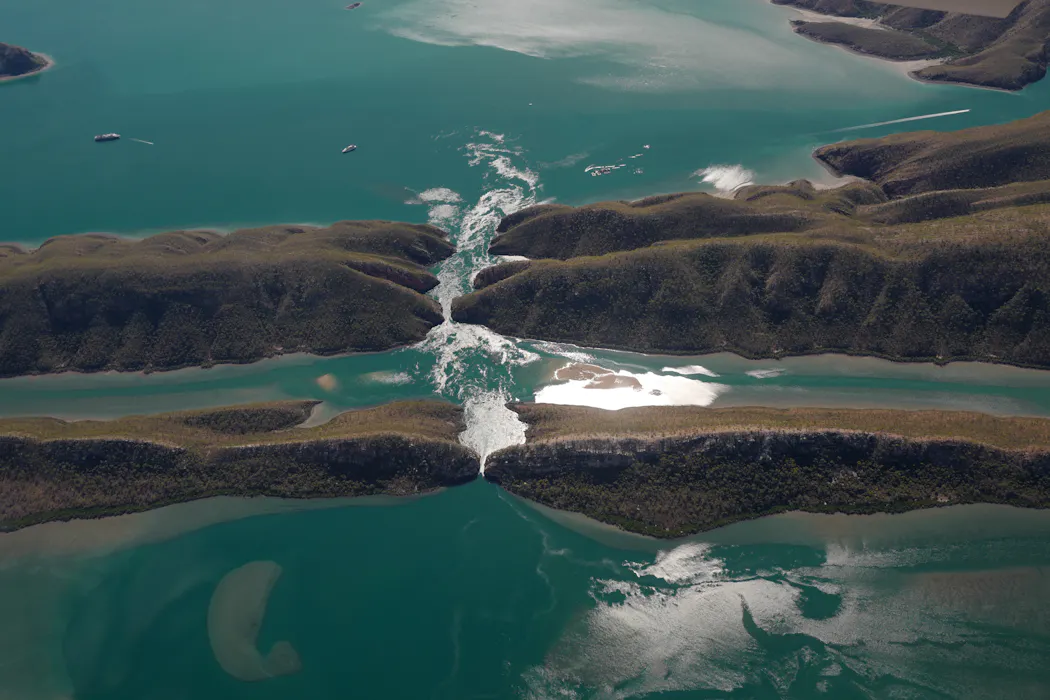
地球的潮汐不仅由月球和太阳的引力驱动,还受到海岸地形、海底地形和大洋盆地共鸣等多种因素的影响1。这些因素共同决定了不同地区潮汐范围的巨大差异——澳大利亚金伯利海岸的潮差可超过10米,而加拿大芬迪湾的潮差则可达16米1。内部潮汐通过与表面潮汐的相互作用,进一步影响着潮汐能量的传递1。
随着全球气候变暖,潮汐格局正在发生改变。海平面上升、海洋增温和分层加强等气候变化带来的影响,已经开始改变潮汐的大小1。这些变化对沿海社区的防灾工作产生了日益重要的影响。澳大利亚维州的Lakes Entrance因潮汐范围变化而面临日益严重的洪涝问题,当地议会正在寻求400万澳元的资金用于排水系统升级1。
Tidal patterns across the world are determined by far more than lunar and solar gravitational forces alone. 1 Coastal geography, seafloor topography, and ocean basin resonance all play significant roles in shaping how tides behave in different regions. 1 The variation in tidal range is dramatic: Australia's Kimberley Coast experiences tidal swings exceeding 10 meters, while Canada's Bay of Fundy reaches up to 16 meters. 1
As the planet warms, the mechanisms driving tidal change are shifting. Rising sea levels, ocean warming, and increased water column stratification—all consequences of climate change—are now altering tidal ranges globally. 1 Internal tides, which form through interactions between surface tides and ocean structure, further complicate these dynamics by influencing how tidal energy is distributed. 1 The cumulative effect is already affecting coastal communities: in Lakes Entrance, Victoria, changes in tidal range have become a primary driver of flooding hazards, prompting local authorities to seek 4 million Australian dollars in funding for drainage system upgrades. 1
评论
还没有评论,欢迎留下第一条。