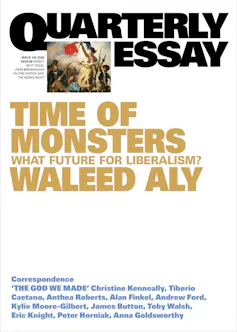
澳大利亚政治评论家沃利德·阿利在其新著《怪物时代:自由主义的未来?》中提出,自由主义正陷入困境1。阿利声称"我确实认为自由主义因其未能理解的原因陷入困境"1,指出英语民主国家中的自由主义正面临来自左右两翼的后自由主义运动挑战,包括激进进步运动和右翼民粹主义1。
阿利认为自由主义的衰落源于其未能提供意义感1。虽然自由主义的核心承诺包括个人自由、民主政治和公民平等1,但当代激进进步运动已根植于西方马克思主义、后殖民理论和大陆哲学之中1。然而,尽管诊断了自由主义面临的困境,阿利也承认现存的后自由主义替代方案并不优于自由主义本身1。他的结论是:"除非发生真正的革命,否则需要数十年才能完全取代自由主义,而现存的后自由主义候选者太不吸引人无法完成这个任务"1。这揭示了当前的困局:虽然自由主义面临广泛批评,但其替代品目前仍显不足。
Australian political commentator Waleed Aly has argued that liberalism faces a fundamental crisis, claiming that it struggles due to reasons "it does not understand."1 In his work The Age of Monsters: The Future of Liberalism?, Aly contends that liberal democracy in English-speaking countries confronts challenges from post-liberal movements on both the left and right, including radical progressive activism and right-wing populism.1 At the core of his critique lies the assertion that liberalism has failed to provide citizens with a sense of meaning and purpose.1
The central commitments of liberalism—individual freedom, democratic governance, and civic equality—are being questioned by movements rooted in Western Marxism, postcolonial theory, and continental philosophy.1 Yet Aly's own analysis arrives at a paradoxical conclusion: while existing post-liberal alternatives are inadequate replacements, genuine ideological transformation would require either a true revolution or decades of gradual displacement.1 The commentator identifies a deeper tension that cannot be resolved without fundamentally altering liberalism itself—namely, that the tradition cannot offer a unified moral vision or thick ethical framework while remaining true to its foundational principles.1
评论
还没有评论,欢迎留下第一条。