科研人员在最新发表的研究中解开了塔斯曼海两条海底火山链并行分布的成因之谜。1豪勋爵链和塔斯曼蒂德链这两条火山链间距为650至900公里,1其形成源于一个来自地球深部地幔的地幔柱被沉没的海洋地壳板片在约500公里深处阻挡后,分流偏转并在板片两侧的间隙中上升。1研究成果已刊登在《冈瓦纳研究》期刊。1
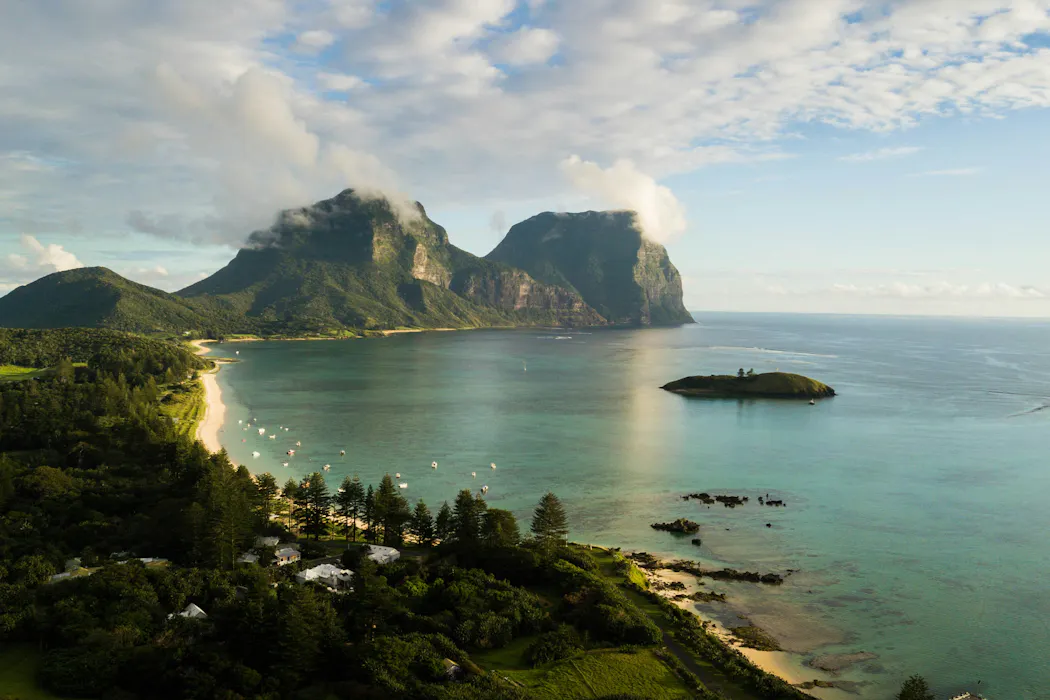
豪勋爵岛位于新南威尔士州海岸以外约600公里处,1其火山链自约2300万年前开始产生较小的喷发,而同期塔斯曼蒂德火山链则产生了较大的喷发。1研究人员基于三种证据得出这一结论:地球内部模拟、过去2亿年板块运动重建以及两条链火山岩浆的化学成分分析。1研究预测,塔斯曼蒂德链最终将成为主要通道,而豪勋爵链将在数百万年后停止活动。1
Researchers have identified the mechanism responsible for creating two strikingly similar underwater volcano chains running side by side in the Tasman Sea.1 The study, published in the journal Gondwana Research, reveals that a mantle plume rising from Earth's deep interior is deflected and split by a subducted oceanic plate, channeling molten material upward through gaps on either side of the plate to form the parallel volcanic ridges.1
The two chains—the Lord Howe chain and the Tasmantid chain—are separated by 650 to 900 kilometers and located approximately 600 kilometers off the coast of New South Wales.1 The research demonstrates that the mantle plume is blocked by the subducted oceanic crust at a depth of about 500 kilometers, where it encounters the submerged slab and splits into distinct pathways.1 Evidence supporting this mechanism comes from three independent sources: computer simulations of Earth's interior, reconstruction of plate movements over the past 200 million years, and chemical analysis of the magmatic rocks from both volcanic chains.1
The two chains have experienced markedly different activity patterns.1 The Lord Howe chain began producing smaller eruptions approximately 23 million years ago, while the Tasmantid chain generated larger eruptions during the same period.1 According to the research, the Tasmantid chain is predicted to eventually become the dominant conduit for volcanic activity, while the Lord Howe chain is expected to cease activity millions of years in the future.1
评论
还没有评论,欢迎留下第一条。