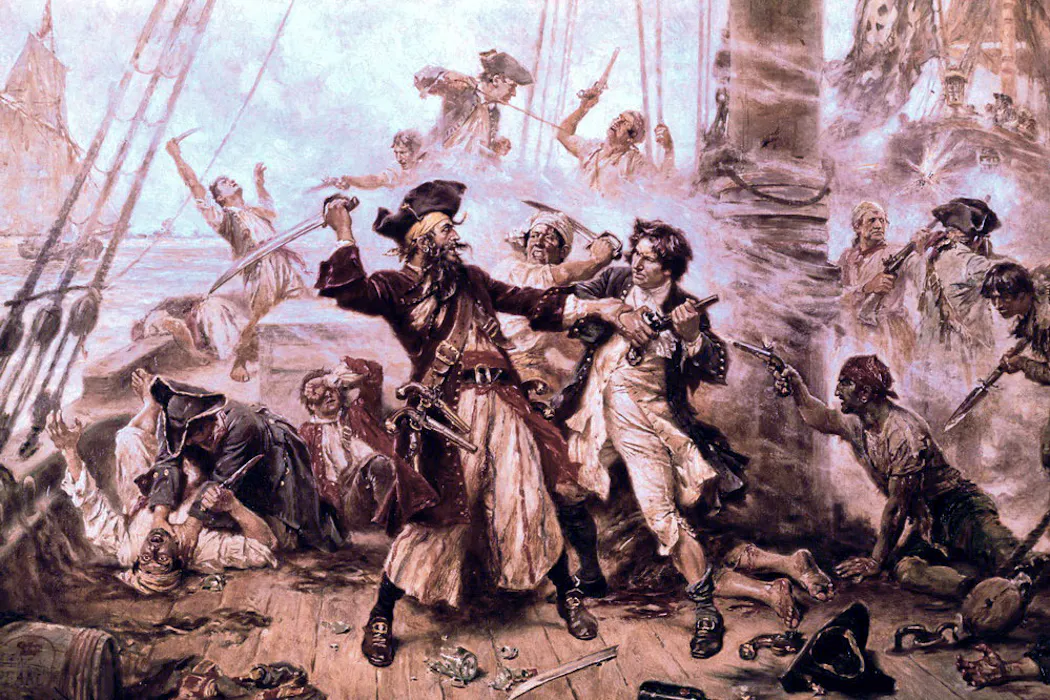
流行文化中关于海盗的描绘往往过于单一,黑胡子等传奇人物的故事强化了人们对海盗的刻板认识1。然而,历史研究表明真实的海盗世界远比这些印象复杂得多。从16至18世纪,世界各地活跃着文化背景、语言、武器和战术各异的海盗势力1。
在黄金海盗时代(约1650年代至1720年代)1,不同地区的海盗集团规模和影响力各不相同。17世纪中期,中国郑成功领导的海盗集团收入甚至超过了荷兰东印度公司1。郑成功在1662年攻占了台湾并驱逐了荷兰人1。同时期在东南亚,摩洛海盗对西班牙在亚洲的帝国扩张构成最大威胁1。1762年,英国皇家海军与东印度公司的联合军队进攻了西班牙控制的马尼拉1。与此同时,加勒比海地区也涌现出包括黑胡子(1680–1718年)在内的英国海盗1。这些历史事实表明,海盗群体的多样性远超流行文化所能代表的范围1。
Popular culture has long portrayed pirates as a monolithic group epitomized by figures like Blackbeard, but historical evidence reveals a far more complex and varied reality.1 The actual pirate populations that roamed the seas across centuries and continents differed dramatically in their languages, weapons, tactics, and social composition, challenging the standardized image perpetuated by literature and entertainment.1
The Golden Age of Piracy, spanning roughly from the 1650s to the 1720s, witnessed diverse maritime raiders operating across multiple regions.1 Edward Teach, known as Blackbeard, was an English pirate who lived from 1680 to 1718 and appeared in the 1724 publication "A General History of the Pyrates."1 However, his prominence in popular narratives has overshadowed other significant pirate forces of the era. The Chinese pirate confederation led by Zheng Chenggong demonstrated remarkable economic power during the mid-17th century, generating revenues that exceeded those of the Dutch East India Company.1 In 1662, Zheng Chenggong captured Taiwan and expelled the Dutch colonial presence from the island.1 Meanwhile, Moroccan pirates in the 18th century posed the greatest threat to Spanish imperial interests in Asia, a danger underscored when the British Royal Navy and East India Company launched a joint military assault on the Spanish-held city of Manila in 1762.1
These varied pirate groups operated under fundamentally different circumstances and constraints than the romanticized English and Caribbean pirates of Western imagination, demonstrating that maritime piracy was a global phenomenon shaped by regional politics, economics, and cultures rather than a uniform criminal enterprise.1
评论
还没有评论,欢迎留下第一条。