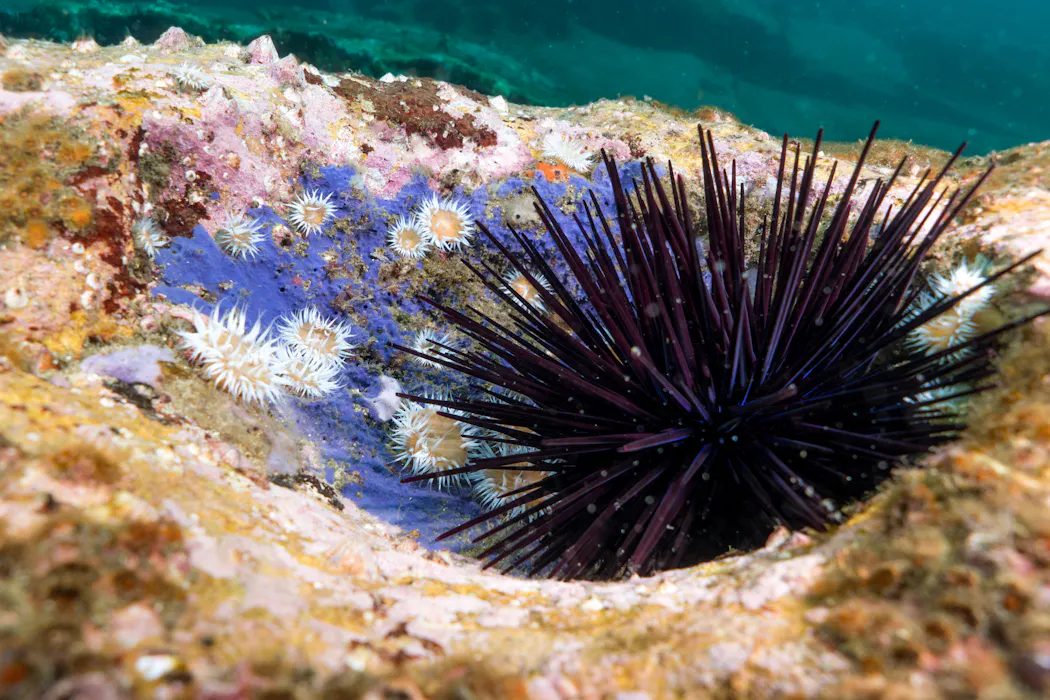
澳大利亚东南沿海的海胆荒漠现象背后的生态机制比传统认知更加复杂。研究团队通过稳定同位素分析发现,长棘海胆的主要食物来源并非海带,而是无脊椎动物和有机物质,其重要性往往等同于或高于海带1。在南新南威尔士州,海胆甚至主要依赖有机物质而非海带维生1。这一发现挑战了长期以来将海胆视为海带衰退主要原因的观点,表明海胆实际上是问题的症状而非根本原因。
海胆种群缺乏有效的天敌制约也是关键因素。对石斑鱼、鲷鱼和岩龙虾的消化道内容物分析表明,这些捕食者很少猎食长棘海胆1。即使在大型掠食者相对充足的保护区(如杰维斯湾海洋公园),海胆荒漠仍然普遍存在1,进一步表明天敌不足并非主因。
气候变化才是海带森林消失的关键驱动力。澳大利亚沿海水温持续上升,加之强降雨产生的大量淡水涌入,这些因素导致海带大规模死亡1。相比之下,人工捕杀海胆作为管理手段面临重重困难——成本高昂、需要持续投入、难以大规模推行,且长期效果有限,移除后留存海胆的繁殖速度甚至会加快1。
Research by Jeremy Day and colleagues has revealed that the decline of kelp forests along Australia's southeastern coast is driven by factors far more complex than the widely accepted urchin-culprit narrative.1 Long-spined sea urchins (Centrostephanus rodgersii) are widespread across southeast Australia, yet stable isotope analysis indicates that invertebrates and organic matter constitute a dietary proportion equal to or greater than kelp in urchin feeding composition.1 In southern New South Wales specifically, sea urchins rely primarily on organic material rather than kelp.1 This finding challenges the conventional explanation for the emergence of urchin barrens in the region.
The predation dynamics further complicate the traditional story. Examination of digestive tract contents from grouper, bream, and rock lobster reveals that these predators rarely consume long-spined sea urchins.1 Even within marine protected areas with abundant large predators, such as Jervis Bay Marine Park, urchin barrens persist.1 These observations suggest that natural predation alone cannot account for controlling urchin populations or preventing barren formation.
Climate-driven environmental changes emerge as the primary mechanism underlying kelp forest loss. Rising coastal water temperatures in Australia combined with heavy rainfall-induced freshwater influxes have triggered large-scale kelp mortality.1 Meanwhile, manual culling of sea urchins presents significant practical limitations: the approach is costly, requires sustained effort, proves difficult to implement at scale, and yields limited long-term effectiveness.1 Additionally, reproduction in remaining urchin populations accelerates following removal efforts.1 These findings underscore that addressing kelp forest decline requires understanding and addressing broader oceanographic and climatic drivers rather than focusing narrowly on urchin population control.
评论
还没有评论,欢迎留下第一条。