电影制作中的许多标志性场景并非实景搭建,而是通过哑光绘画技术创造的精巧幻象。这一技术将艺术家绘制的静止图像与真实动作镜头相结合,以相对低廉的成本营造出庞大逼真的环境1。哑光绘画在电影史上扮演了关键角色,从早期探索到数字革新,推动了视觉特效的发展。
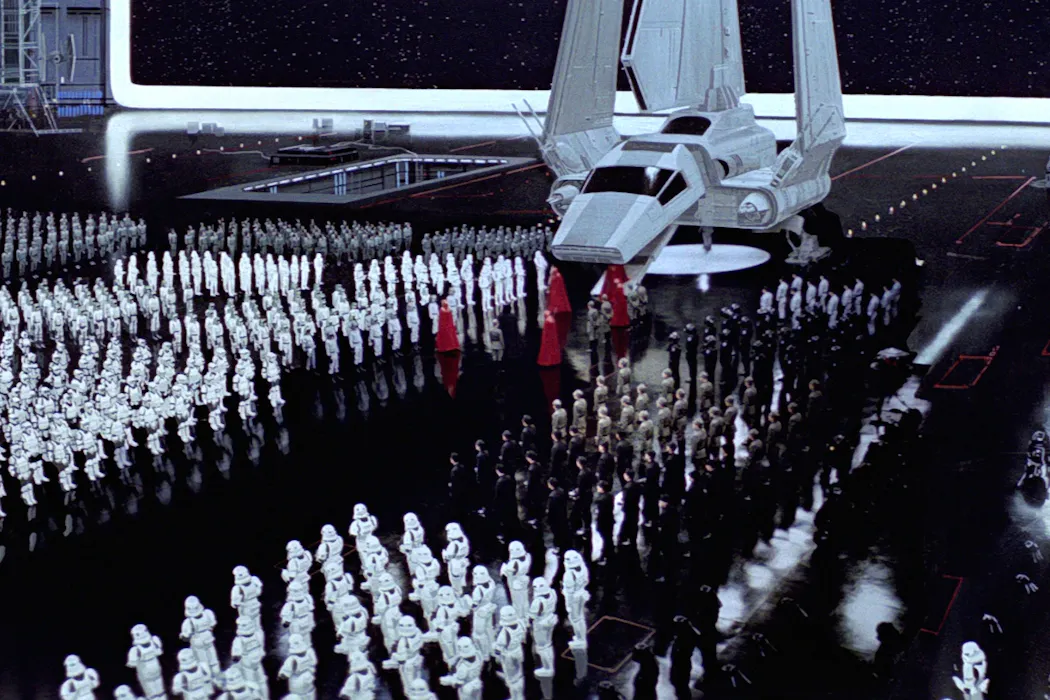
诺曼·黎明在1907年的《加州传教士》中开创了早期哑光绘画技术1。进入现代电影时代,这一技术被广泛应用于大制作影片。1977年至1983年间,《星球大战》三部曲中的行星场景由工业光魔的哑光画家创作1。1981年的《夺宝奇兵》仓库场景和1982年的《银翼杀手》中的大部分场景均采用了这一技术,其中《银翼杀手》由艺术家马修·尤里奇创作的哑光绘画完成1。
数字技术的出现进一步提升了哑光绘画的效率。工业光魔公司在1985年的《年轻的福尔摩斯》中首次使用了数字哑光绘画1。相比传统手工绘画需耗时三个月,数字工作流程显著提高了制作效率1。这一技术革新使得电影人能够更快速、更灵活地实现视觉设想。
Matte painting, a technique that combines hand-drawn static images with live-action footage, has been instrumental in creating vast, convincing environments at minimal cost throughout cinema history.1 The technique emerged as early as 1907 with Norman Dawn's work on "The Missions of California," establishing a foundational approach to expanding film sets beyond their physical limitations.1
The method gained prominence in major productions during the 1980s. In 1981, the warehouse scene in "Raiders of the Lost Ark" was completed using matte painting techniques.1 The following year, most environments in "Blade Runner" were created from matte paintings produced by artist Matthew Yuricich.1 Between 1977 and 1983, the planetary landscapes across the original "Star Wars" trilogy were also rendered by matte painters working at Industrial Light & Magic.1 The transition to digital workflows marked a significant milestone when Industrial Light & Magic first employed digital matte painting on "Young Sherlock Holmes" in 1985.1 While traditional matte painting required approximately three months of labor-intensive work, the shift to digital processes substantially improved efficiency in production timelines.1
评论
还没有评论,欢迎留下第一条。