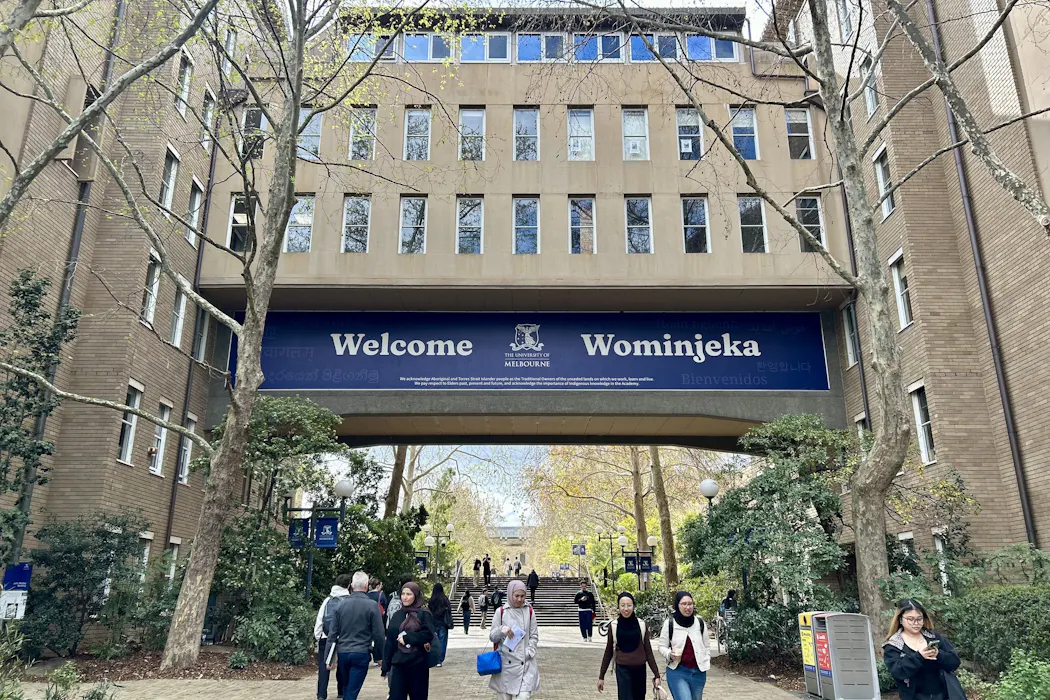
墨尔本大学计划拆除约翰·梅德利大楼,这座由罗伊·格劳兹设计、1971年竣工的标志性建筑,正引发对澳大利亚战后建筑遗产保护的广泛关注 1。根据该校最新2023年总体规划,超过十栋战后建筑已被列入拆除或"退役"计划 1。梅德利大楼因其双塔和跨越式桥梁设计而被誉为"现代叹息桥",长期以来是学生毕业照的标志性背景,承载着几代学生和员工的集体记忆 1。
该建筑代表了1950年代至1970年代"新自由主义"建筑风格的罕见范例 1。专家主张通过翻新改造而非直接拆除的方式来保护这类战后建筑,认为这是遏制建筑部门未来碳排放的最绿色解决方案 1。评论人士指出,这些具有历史意义的建筑"不应该像塑料袋一样被丢弃" 1,强调保留澳大利亚175年大学建筑演变历史的重要性。
The University of Melbourne intends to demolish the John Medley Hall, a landmark structure designed by Roy Grosz that opened in 1971, sparking renewed debate about the preservation of post-war architectural heritage in Australian universities.1 According to the university's latest 2023 master plan, more than ten post-war buildings face demolition or "decommissioning," signaling a broader pattern of erasure affecting mid-twentieth-century campus design.1
The John Medley Hall, recognizable by its distinctive twin towers and spanning bridge connecting them, has become known as the "modern Bridge of Sighs" and serves as an iconic backdrop for student graduation photographs.1 The building exemplifies the "neo-liberalism" architectural style that emerged between the 1950s and 1970s, a period now acknowledged as a significant chapter in Australian architectural history.1 Renovation and adaptive reuse of such structures represents the "greenest solution" for curtailing future carbon emissions in the building sector, according to heritage advocates, offering both environmental and cultural preservation benefits compared to demolition.1 One commentator emphasized that the Medley Hall "should not be discarded like a plastic bag," underscoring the value of retaining the shared memories of generations of students and staff embedded within these structures.1
评论
还没有评论,欢迎留下第一条。