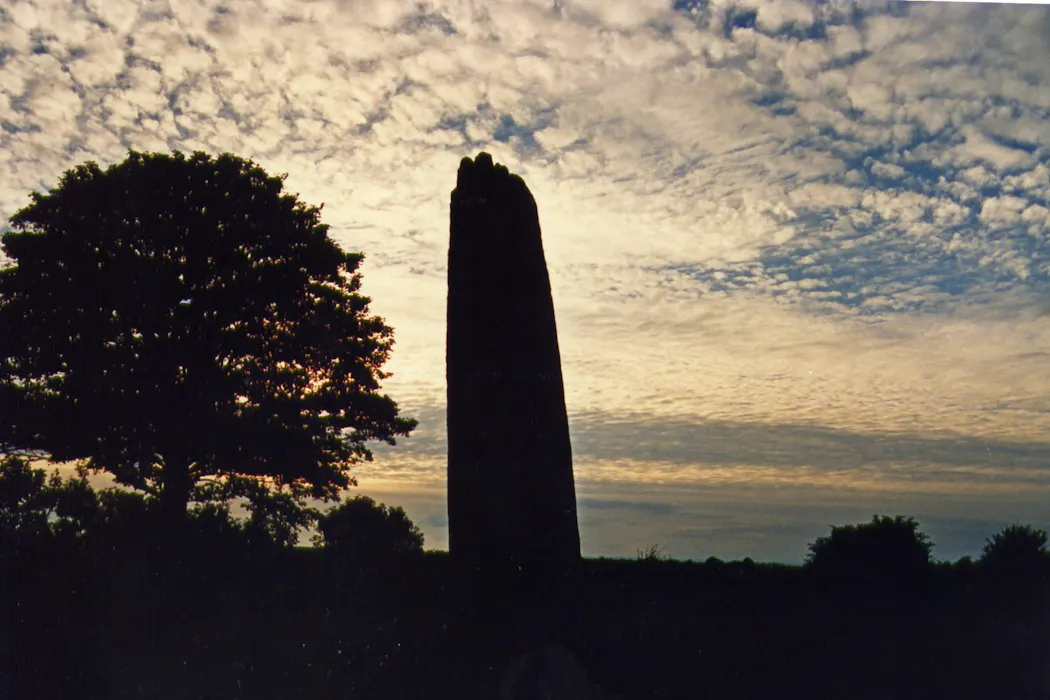
新的地质学研究成功揭示了英国约克郡博罗桥镇一处神秘巨石阵的来源。这项研究通过分析微观矿物晶粒,确定三块各高7米、重约25吨的巨石——英国现存最高的石头排列——来自距离该地18公里处的布林厄姆岩石,而非此前预期的仅13公里外的普朗普顿岩石。1
研究采用了创新的无损"粘胶采样法",研究人员用胶带按压石头表面以粘取微观矿物晶粒,在不破坏这一受保护遗迹的前提下完成了取样。1研究团队分析了超过400粒矿物样本,其中锆石的年龄范围从3.77亿年至37亿年,通过这些矿物的"年龄指纹"进行对比分析。1
这一发现表明史前人类为了获得特定的石材,不惜跋涉更远的距离付出巨大努力。1研究人员推测失落的第四块箭石可能就是如今高达5.5米的"战斗十字架",其矿物指纹与现存三块巨石相同。1这项研究已发表在《英国皇家学会学报A》上。1
Scientists have successfully identified the source of the Devil's Arrows, three prehistoric megaliths in northern England, through microscopic mineral analysis.1 The three stones, each standing 7 meters tall and weighing approximately 25 tons, represent Britain's highest stone alignment.1 Using a non-invasive "tape-sampling method," researchers extracted microscopic mineral samples from the surface of the stones and compared the age fingerprints of minerals like zircon to determine their geological provenance.1 The analysis of over 400 mineral grains, with zircon ages ranging from 377 million to 3.7 billion years, revealed that the stones originated from Brimham Rock, located 18 kilometers from Boroughbridge in Yorkshire, rather than from the closer Plompton Rock, 13 kilometers away, as previously expected.1
The findings, published in the Proceedings of the Royal Society A, demonstrate that prehistoric people invested considerable effort to obtain specific stone materials for their monuments.1 The tape-sampling technique preserved the protected archaeological site while enabling detailed geological characterization.1 Additionally, researchers identified a possible connection to a fourth missing arrow stone: the 5.5-meter-tall Battle Cross nearby shares the same mineral fingerprint as the three surviving megaliths, suggesting it may be part of the original arrangement.1
评论
还没有评论,欢迎留下第一条。